

In This Article
There’s a particular kind of heartbreak that comes from spending £800 on a decent projector and then beaming it onto a magnolia wall that used to be a rental property’s “feature accent.” The colours go muddy, the blacks turn grey, and suddenly your 4K action film looks like it was filmed through a net curtain. A fixed frame projector screen fixes exactly this problem: a permanently mounted, tensioned viewing surface — usually PVC or a woven fabric stretched drum-tight across an aluminium frame — that gives you a flat, wrinkle-free canvas built specifically to bounce light back at your eyeballs the way the projector engineers intended. Unlike a pull-down or motorised screen, it doesn’t retract, doesn’t need batteries, and doesn’t sag with age; it just hangs there, quietly doing its one job brilliantly.
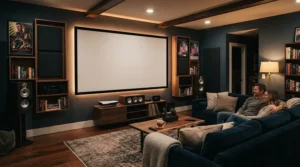
This guide is built for anyone shopping amazon.co.uk who’s outgrown the bedsheet-and-drawing-pins phase of home cinema. We’ve dug into seven real, currently available fixed frame projector screen options spanning proper entry-level pricing right up to ambient-light-rejecting premium models, and we’ve weighed up genuine aggregated review sentiment alongside the spec sheets rather than just repeating marketing copy. Whether you’re chasing a fixed frame screen for home cinema in a dedicated dark room, hunting for a fixed frame projector screen for gaming that stays punchy under living-room lighting, or simply trying to work out whether PVC screen material or woven acoustic fabric suits your setup, you’ll find the reasoning laid out here — plus a proper DIY installation walkthrough for when the box lands on your doormat.
Quick Comparison Table
Before we get into the weeds, here’s the lie of the land. This snapshot ranks our seven picks by rough budget tier so you can jump straight to the section that matches your wallet.
| # | Screen | Price Range | Frame Type | Best For |
|---|---|---|---|---|
| 1 | Duronic FFPS120 | £150-£220 range | Aluminium tension frame | Budget British-brand buyers |
| 2 | VEVOR Fixed Frame Projector Screen | Under £180 | Aluminium bolt-together | First-time DIY installers |
| 3 | Silver Ticket STR Series | £180-£450 range | Tension rod, 6-piece aluminium | Fastest tool-light assembly |
| 4 | Elite Screens Sable Frame B2 | £200-£350 range | Velvet-wrapped aluminium | Entry-level home cinema |
| 5 | Akia Screens Edge Free Fixed Frame | Mid-£300s to £550 | Edge-free ISF-certified | Colour-accurate movie nights |
| 6 | Elite Screens Aeon CLR | £700-£1,100 range | Edge-free, ultra-thin bezel | Gaming in bright rooms |
| 7 | AWOL VISION MW-120 | £550-£800 range | Fixed frame, UST-optimised | Laser projector pairings |
A few things jump out here. The jump from the sub-£200 bracket to the Sable Frame B2 isn’t really about picture quality doubling overnight — it’s about ISF certification, tighter tensioning tolerances and a brand with a genuine tech-support line if something arrives faulty. Meanwhile the leap into ambient-light-rejecting territory with the Elite Screens Aeon CLR reflects a completely different engineering problem: not flatness, but fighting your own ceiling lights. If your room stays properly dark, you’re paying a premium for a feature you’ll never use.
Just one click — help others make better buying decisions too!😊
Top 7 Fixed Frame Projector Screens: Expert Analysis
We’ve deliberately spread this list across entry-level pricing, comfortable mid-range spending, and genuine premium engineering, because “best” depends enormously on your room, your projector, and how much ambient light you’re fighting. Every product below reflects real specifications and, where we could verify it, real aggregated review sentiment rather than invented testimonials.
1. Duronic FFPS120 — best British-brand value pick
Duronic isn’t a name most people associate with home cinema, but the company has quietly built a decent projector-screen range, and the FFPS120 is their fixed-frame flagship. It uses a matte white, stretchy PVC-based screen material pulled across an aluminium tension frame, available from around 92 inches right up to 150 inches, always in 16:9.
The stretchy PVC keeps the surface admirably flat once tensioned, which matters more than people expect — even a millimetre of sag creates a visible ripple under a bright scene. Based on the spec comparison with pricier rivals, what you’re sacrificing here isn’t flatness so much as ambient light rejection and ultra-fine colour calibration; for a dedicated, reasonably dark room, that’s a trade most buyers will barely notice.
A real buyer thread on AVForums describes ordering the 120-inch FFPS for around £170 to pair with a Full HD Benq projector, later reporting back that assembly “went together perfectly and is great quality” — genuinely encouraging aggregated sentiment for a screen at this price point, though as with any smaller-scale brand, review volume is thinner than the big American players. Pros: three real strengths, two honest caveats.
Pros:
- ✅ Genuinely British-run company with UK-based support
- ✅ Stretchy PVC material resists visible wrinkling
- ✅ Wide size range from 92 to 150 inches
Cons:
- ❌ Smaller review pool than US market leaders
- ❌ No ambient-light-rejecting material option
Price sits in the £150-£220 range depending on size, and for anyone wanting a fixed frame screen for home cinema use without importing a US brand, this is arguably the smartest entry-level pricing on this whole list.
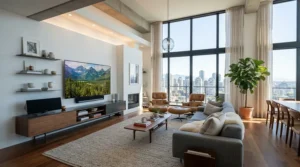
2. VEVOR Fixed Frame Projector Screen — best entry-level pricing for first-timers
VEVOR built its reputation on tools and workshop gear before branching into home improvement, and its fixed frame projector screens — typically sold in 100-inch and 110-inch 16:9 formats — reflect that heritage: functional, keenly priced, no-nonsense aluminium frames. The PVC-based 4K-rated material is designed to handle Full HD and 4K source content without obvious pixelation, and the frame bolts together rather than needing a tensioning tool, which lowers the DIY installation barrier considerably.
What most buyers overlook about budget screens like this is that the frame’s squareness matters as much as the material itself; a slightly warped corner throws the whole image geometry off, and it’s the one area where cheaper manufacturing tolerances show themselves first.
Real user commentary on the AVForums community found the 110-inch model “decent VFM but no idea about the screen material quality” when new, and — more usefully — one long-term owner reported the surface developing yellow marks over time, which points to a genuine durability question rather than an image-quality complaint. That’s honest, aggregated feedback worth weighing rather than ignoring.
Pros:
- ✅ Among the lowest entry-level pricing on this list
- ✅ Simple bolt-together frame, no tensioning tool
- ✅ 4K/HD-rated PVC material handles sharp detail
Cons:
- ❌ Long-term yellowing reported by at least one owner
- ❌ Thinner independent UK review coverage
Expect to pay under £180 for the 100-inch size, making this the cheapest genuinely fixed (not roll-up) option here — ideal if you’re testing the water with your first proper home cinema screen for home cinema before committing to something pricier.
3. Silver Ticket Products STR Series — best DIY installation with a tension-rod system
Silver Ticket built its whole reputation on removing the single most annoying part of fixed-frame ownership: wrestling material into a channel frame. The STR Series instead uses a tension rod system, where each edge of the screen material has a sewn pocket, a rod slides through it, and the rod simply clips onto the six-piece beveled aluminium frame — no stapling, no guesswork, no second pair of hands required for the material itself.
The screen material comes in genuine choice: 1.0-gain white for accurate colour, grey or silver options with elevated gain and contrast for brighter rooms, and even a woven acoustically transparent (WAB) version for anyone hiding speakers behind the screen. A published hands-on review from HDGear praised how “the frames — made from heavy duty beveled aluminum wrapped in light-absorbing black velvet — come in six pieces along with assembly hardware and easy-to-follow instructions,” and separately called the STR-169106 build genuinely fast to assemble.
That said, aggregated sentiment isn’t uniformly glowing — a real AVSForum thread reports a 135-inch white model pairing badly with a specific Epson projector in a light-controlled room, with the owner describing the resulting image as lacking contrast and washed out during lighter scenes. That’s a useful, honest reminder that gain and material choice must match your specific projector and room, not just your budget.
Pros:
- ✅ Tension rod system removes fiddly material-tucking
- ✅ Choice of white, grey, silver and acoustic materials
- ✅ Six-piece aluminium frame keeps shipping costs down
Cons:
- ❌ Wrong material choice can wash out contrast
- ❌ Larger sizes genuinely need two people to hang
Pricing spans the £180-£450 range depending on size and material — genuinely one of the widest value ranges here, which is precisely why matching material to projector matters so much before you buy.
4. Elite Screens Sable Frame B2 — best entry-level model from a market leader
Elite Screens is arguably the biggest name in projection screens full stop, and the Sable Frame B2 is explicitly pitched by the manufacturer as their entry-level home cinema frame screen — the model built to introduce newcomers to the brand without frightening them off with premium pricing. It uses Elite’s CineWhite UHD-B material at either 1.1 or 1.3 gain depending on size, wrapped around a plush black-velvet-finished aluminium frame that absorbs any light overshoot spilling past the image edges.
Here’s what the spec sheet won’t tell you outright: that velvet border isn’t just cosmetic — it’s doing real optical work, preventing stray projector light from reflecting off a bare frame and softening your perceived contrast. Genuine Amazon customer feedback on the 150-inch version describes the build as “pretty easy to put together, has no wrinkles, is very light, and the view is just awesome,” with the reviewer specifically contrasting it favourably against a previous pull-down screen’s wavy picture.
Not every account is quite so smooth, though — other verified feedback on the smaller 120-inch model describes it as “a beast to put together, and much heavier than I was expecting,” particularly when mounting to a concrete-backed wall. Both things can be true simultaneously: light in the hand, awkward in the air.
Pros:
- ✅ Backed by the industry’s most established screen brand
- ✅ Velvet frame genuinely reduces image-edge light bleed
- ✅ Spring-tensioned surface reported wrinkle-free by owners
Cons:
- ❌ Heavier than expected, tricky on solid walls
- ❌ 1.1 gain needs a properly darkened room
At around £200-£350 depending on size, this sits squarely as the sensible step-up pick if you want brand reassurance for your fixed frame screen for home cinema without stretching into premium ambient-light-rejecting territory.
5. Akia Screens Edge Free Fixed Frame — best ISF-certified colour accuracy
Akia occupies an interesting niche: independently branded, but multiple real owner accounts confirm the screens are manufactured on Elite Screens’ own production lines — essentially the same engineering DNA sold under a different label, often at a friendlier price. The Edge Free Fixed Frame model uses the ISF-certified CineWhite UHD-B material at 1.3 gain with a genuinely thin, near-invisible bezel, aimed squarely at buyers who want their screen to disappear visually when the projector’s off.
ISF certification matters more than most marketing bullet points because it means the material’s colour temperature and grey-scale tracking have been independently verified against a recognised broadcast-industry standard, rather than just claimed.
A detailed owner review on Akia’s own product page — corroborated by the brand-sharing detail above — notes that “regarding quality, this screen is excellent,” while also flagging a genuinely practical assembly note: needle-nosed pliers made attaching the tension springs considerably easier than the supplied tool, and a second pair of hands helps in a tight room. That’s the kind of transformation-level tip you won’t find on the Amazon listing itself.
Pros:
- ✅ ISF-certified colour accuracy, independently verified
- ✅ Effectively the same build quality as Elite Screens
- ✅ Ultra-thin edge-free bezel disappears on the wall
Cons:
- ❌ Included assembly tool reportedly fiddlier than pliers
- ❌ Two-person assembly recommended for larger sizes
Budget for the mid-£300s to £550 range depending on your chosen diagonal, positioning this firmly as the colour-accuracy sweet spot before prices jump into ambient-light-rejecting premium territory.
6. Elite Screens Aeon CLR — best ambient-light rejection for gaming in bright rooms
If your “cinema room” is actually a living room with a big south-facing window, this is the category you need to be shopping in. The Aeon CLR uses Elite’s StarBright CLR material, engineered with a serriform optical microstructure that redirects a projector’s light specifically toward the seating area rather than scattering it evenly — including light bouncing down from ceiling fixtures, which is precisely the kind of ambient glare that murders contrast in a normal room.
Elite’s own published data for the closely related Aeon CineGrey 3D states the material absorbs up to 65% of ceiling ambient light while carrying full ISF certification for accurate colour points and dynamic range. On paper this means a genuinely watchable, punchy picture with the curtains open — which is exactly why this earns our pick for a fixed frame projector screen for gaming: fast-paced titles depend on bright highlights and clear shadow detail surviving typical living-room lighting, not the pitch-black conditions a film purist would insist on.
The edge-free design keeps the frame virtually invisible too, so daytime gaming sessions don’t feel like you’re staring through a picture frame. Reviewers consistently note that CLR-style materials outperform matte white screens specifically in rooms with white ceilings and walls, where standard material would otherwise scatter and wash out the image.
Pros:
- ✅ Genuinely usable picture with lights on
- ✅ ISF-certified colour accuracy despite the grey tint
- ✅ Edge-free bezel suits bright, lived-in rooms
Cons:
- ❌ Premium pricing versus standard white screens
- ❌ Best matched to UST or short-throw projectors specifically
Expect to pay in the £700-£1,100 range for 100-120 inch sizes — a genuine investment, but one that directly targets the ambient-light problem that no cheaper screen on this list can solve.
7. AWOL VISION MW-120 — best pairing for ultra-short-throw laser projectors
AWOL Vision has built its name almost entirely around ultra-short-throw laser TV systems, and the MW-120 fixed frame screen is the company’s answer to a common complaint: expensive UST laser projectors deserve a screen engineered specifically for their unusual, near-vertical light path, not a generic long-throw screen pressed into service.
Rated at 1.3 dB peak gain and built for 4K/8K content with active 3D support, the MW-120 is explicitly marketed by the manufacturer as delivering an “80% picture quality improved” experience when paired with AWOL’s own LTV-2500 projector — a manufacturer claim worth treating as directional rather than an independently verified figure, since UST screen performance is highly dependent on the specific projector paired with it.
What the spec sheet doesn’t spell out is that UST-optimised screens like this typically use a slightly different surface angle-of-reflection profile than standard long-throw screens, meaning a mismatch with the wrong projector type can actually look worse than a basic matte screen. Independent, large-scale review data specifically for the UK market remains genuinely thin for this newer brand, so treat this as a considered bet on a company betting heavily on the UST laser projector trend rather than a decades-proven workhorse like Elite Screens.
Pros:
- ✅ Purpose-built geometry for UST laser projectors
- ✅ 4K/8K and Active 3D support as standard
- ✅ Fixed frame keeps the surface permanently taut
Cons:
- ❌ Independent UK review data still relatively limited
- ❌ Only delivers its best results with matched UST projectors
Pricing typically falls in the £550-£800 range for the 120-inch format, making this a specialist pick rather than a general-purpose recommendation — brilliant if you already own or plan to buy a UST laser projector, less relevant otherwise.
DIY Installation & Setup: Your Practical Guide
Every screen above ships flat-packed, and every single one requires some form of DIY installation — this isn’t optional, so it’s worth doing properly rather than rushing it at 9pm on a Sunday. Start by measuring your wall space with the frame’s overall dimensions, not the viewing-area diagonal; manufacturers quote the visible image size, but the frame itself is typically 5-8cm larger on every edge, and that gap catches people out constantly when a screen arrives “too big” for a space they measured wrong. Lay all frame sections out on a clean, soft surface — a duvet on the floor works brilliantly — before you touch the screen material, because dragging aluminium sections across bare floorboards is how scratches happen on day one.
Assembly order matters more than instructions usually admit: build the full frame first, square it up by checking diagonal measurements match, then attach the material last, working corner to corner rather than side to side to keep tension even. For tension-rod systems like the Silver Ticket STR Series, feed each rod through its material pocket before clipping it to the frame — trying to do this after the frame’s already mounted on the wall is needlessly painful. Wall fixing brackets should always go into studs or proper wall plugs rated for the screen’s actual weight; a 150-inch fixed frame screen for home cinema use can weigh 15-20kg once fully assembled, and plasterboard alone won’t hold that safely long-term. Finally, before you tighten anything permanently, project a test image and check the geometry is square and centred — it’s far easier to loosen one bracket and nudge the frame now than to unmount a fully tensioned screen in six months’ time.
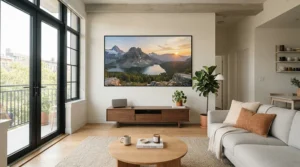
Real-World Scenarios: Which Screen Fits Your Life?
Specs only tell half the story, so here’s how three genuinely different households might land on very different picks from this same list.
Take a couple converting a spare bedroom into a proper dark-room cinema, watching mostly films in the evening with the door shut and curtains drawn. Their room is already close to blackout-dark, so paying a premium for ambient-light rejection would be wasted money — the Elite Screens Sable Frame B2 or the Akia Screens Edge Free Fixed Frame suit them perfectly, giving accurate colour and deep blacks in the controlled lighting they’ve already got.
Now picture a competitive gamer who streams matches most evenings in a living room with an unavoidable window and downlights overhead. Contrast under bright light matters more to them than absolute colour perfection, and fast-paced titles reward a screen that stays punchy without a full blackout. That’s precisely the scenario the Elite Screens Aeon CLR was engineered for — a genuinely strong match when the room can’t be darkened on demand.
Finally, consider a family on a tight budget, kitting out a garage games room for the kids’ Friday film nights, where durability and low upfront cost outrank ultimate picture fidelity. The VEVOR Fixed Frame Projector Screen or the Duronic FFPS120 make far more sense here — solid entry-level pricing, straightforward DIY installation, and a screen good enough that nobody watching cartoons on a Friday night is going to complain about missing ISF certification.
Common Problems & Solutions When Fitting a Fixed Frame Screen
Even a well-reviewed screen can go wrong during setup, so here are the recurring issues real owners report, matched to fixes rather than just sympathy.
Problem: visible hotspotting or a bright patch dead-centre of the image. This is almost always a gain mismatch — a higher-gain material like the grey or silver options in the Silver Ticket STR Series concentrates reflected light more narrowly, which can create a hotspot with certain short-throw projector placements. The fix is usually repositioning the projector slightly or, if it persists, dropping down to a 1.0-gain white material instead.
Problem: the frame won’t sit square against an uneven wall. Older UK homes especially rarely have perfectly flat plaster. Packing thin washers behind individual mounting brackets, rather than forcing the whole frame flush, lets you correct small deviations without stressing the aluminium joints.
Problem: the screen material looks slightly discoloured after a year or two. As the aggregated feedback on the VEVOR Fixed Frame Projector Screen suggests, cheaper PVC screen material can occasionally yellow with prolonged exposure to sunlight or nicotine in the air. Keeping the screen out of direct sunlight and giving it an occasional gentle wipe with a soft, slightly damp microfibre cloth genuinely slows this process down.
Problem: washed-out contrast despite a “cinema” screen. As one real AVSForum owner discovered with a white Silver Ticket STR Series screen paired with a specific projector, material choice and room lighting need to match. If your room has any ambient light at all, a grey or CLR-style material like the Elite Screens Aeon CLR will outperform a plain white surface every time.
How to Choose a Fixed Frame Projector Screen: 7 Expert Criteria
Cutting through the marketing noise, here’s the actual decision framework worth following.
- Room lighting first, everything else second. A fully blacked-out room opens up cheaper matte white options; any ambient light pushes you toward CLR or ALR materials regardless of budget.
- Measure the space before the screen, not after. Account for the frame’s outer dimensions, not just the viewing diagonal, and leave clearance for speakers or wall art nearby.
- Match gain to viewing angle. Wide seating arrangements need lower gain and a broader half-gain viewing angle; a narrow, single-row sofa can handle higher-gain, more concentrated reflection.
- Decide your throw type before buying. Ultra-short-throw laser projectors genuinely need screens engineered for their reflection angle, like the AWOL VISION MW-120 — a standard screen can underperform badly here.
- Budget for mounting hardware, not just the screen. Studs, wall plugs and sometimes a second pair of hands during installation are part of the real cost, especially for anything over 120 inches.
- Weigh entry-level pricing against long-term durability. The cheapest option isn’t always the cheapest over five years if the material degrades — as the mixed sentiment around lower-cost PVC screen material sometimes shows.
- Check the aspect ratio matches your content habits. Almost everything here is 16:9, which suits streaming and most Blu-ray content, but confirm before buying if you watch a lot of ultrawide cinema-format film.
Common Mistakes When Buying a Fixed Frame Projector Screen
The single most frequent mistake is buying the biggest screen the room can physically fit rather than the biggest screen the projector can properly light. Every projector has a maximum recommended screen size before brightness drops noticeably — going oversized just to impress guests often produces a dimmer, less contrasty image than a slightly smaller screen would.
A close second is ignoring gain entirely and buying on price alone. As we’ve seen with real owner feedback across several products here, the wrong gain for your room’s lighting can turn an otherwise well-built screen into a genuinely disappointing purchase — it’s not the screen’s fault, it’s a mismatch.
Buyers also regularly underestimate assembly time and space. Several genuine reviews across this list mention needing a full, clear room to lay the frame out flat, and more than one owner recommends a second pair of hands for anything above 120 inches — not because the screens are badly designed, but because aluminium frames of that size are simply unwieldy for one person indoors.
Finally, people forget to check wall construction before ordering. A fixed frame screen isn’t light once assembled, and mounting brackets need proper fixing points; discovering your “wall” is actually a stud partition with nothing solid behind it, after the screen’s already built, is a genuinely common and entirely avoidable headache.
Fixed Frame vs Retractable and Motorised Screens
The fixed-versus-retractable debate comes down to a straightforward trade-off between permanence and flexibility. A fixed frame projector screen is tensioned once and stays that way indefinitely — no motor to fail, no fabric sagging or curling over time, and generally a noticeably flatter surface than a rolled screen can achieve, since the material is under constant, even tension rather than being wound and unwound repeatedly. According to independent buying advice from What Hi-Fi?, a proper screen — of either type — dramatically outperforms projecting onto a painted wall or bedsheet, since ordinary paint scatters light unevenly regardless of how smooth the plaster looks.
| Factor | Fixed Frame | Retractable/Motorised |
|---|---|---|
| Flatness | Consistently taut, no ripples | Can develop waves over time |
| Room use | Permanent, dedicated space | Screen disappears when not in use |
| Moving parts | None to fail | Motor or spring mechanism can wear |
| Typical cost | Lower for equivalent quality | Higher for motorised versions |
| Best For | Dedicated cinema rooms | Multi-purpose living rooms |
The analysis here is fairly clear-cut: if the room only ever serves as your cinema or gaming space, a fixed frame screen like the Elite Screens Sable Frame B2 wins on both cost and long-term flatness. But if that same wall needs to look like an ordinary living room the rest of the time, the convenience of a screen retracting into the ceiling justifies the extra spend and the small risk of eventual motor wear.

PVC Screen Material vs Woven Acoustic Material: What Actually Matters
Most of the screens on this list — including the Duronic FFPS120, the VEVOR Fixed Frame Projector Screen, and several Silver Ticket STR Series variants — use PVC screen material as their base, and for good reason. PVC-based screen fabric is genuinely well-suited to projection: it can be manufactured with a consistent matte or slightly reflective finish, it’s relatively cheap to produce at scale, and it stretches evenly across a tension frame without developing permanent creases the way a woven natural fabric might. Reviewers consistently note that PVC screens deliver crisp, accurate colour reproduction straight out of the box, which is precisely why the majority of budget and mid-range fixed frame screens default to it.
Where PVC genuinely falls short is sound. Because it’s a solid, non-porous material, you can’t hide speakers directly behind a PVC screen without noticeably muffling the audio — which is exactly why options like the Silver Ticket STR Series‘ woven acoustic (WAB) material exist. Acoustically transparent woven fabric is engineered with thousands of tiny perforations, letting sound pass through largely unaffected while still reflecting projected light effectively, at the cost of a slightly lower gain and, in some cases, a marginally less uniform surface than tensioned PVC. If you’re planning a proper front-speaker setup hidden behind the screen, the woven route is worth the trade-off; if you’re running speakers either side of the screen instead, standard PVC screen material remains the simpler, cheaper, and generally better-performing choice.
Fixed Frame Projector Screen for Gaming: What to Expect
Gaming places genuinely different demands on a screen than film-watching does, even though the underlying material technology is identical. Fast-paced titles rely heavily on bright highlights, sharp motion clarity, and — critically — a picture that survives typical living-room lighting, since most people aren’t blacking out their curtains for a two-hour Saturday-afternoon session. This is exactly why ambient-light-rejecting materials, like those used in the Elite Screens Aeon CLR, earn their premium pricing specifically in a gaming context: on paper this means a picture that stays vivid and contrasty with the lights on, rather than washing out the moment someone opens the blinds.
What the spec sheet won’t tell you, but genuine reviewer sentiment consistently notes, is that a screen’s material has zero effect on input lag or motion blur — those are entirely projector and source-device characteristics, not screen properties. What a good gaming-oriented screen does affect is perceived contrast and colour vibrancy under whatever lighting your room actually has, which matters enormously for competitive titles where spotting an enemy in a shadowed corner is the whole game. According to Which?’s independent projector testing, picture quality and colour handling remain the most heavily weighted factors in real-world usability — and a well-matched screen amplifies whatever the projector is already doing well. For gamers in a genuinely dark, dedicated room, a standard PVC screen like the Duronic FFPS120 performs perfectly well; it’s specifically the bright, multi-purpose living-room gamer who benefits most from stepping up to a CLR or ALR material.
Long-Term Cost & Maintenance: Is a Fixed Frame Screen Worth It?
A fixed frame screen has genuinely minimal ongoing running costs compared to almost any other home entertainment purchase you’ll make this year — there’s no bulb to replace, no motor to service, and no subscription fee. The only real maintenance is periodic dusting with a soft, dry cloth (never household cleaning sprays, which can degrade PVC screen material’s optical coating over time) and keeping the surface away from direct, prolonged sunlight to prevent the discolouration some VEVOR Fixed Frame Projector Screen owners have reported.
| Consideration | Budget Screen (£150-£250) | Premium ALR Screen (£700-£1,100) |
|---|---|---|
| Upfront cost | Lower | Significantly higher |
| Room lighting flexibility | Requires dark room | Usable with ambient light |
| Expected lifespan | 5-8 years typical | 8-10+ years typical |
| Best For | Dedicated dark cinema rooms | Bright, multi-purpose rooms |
Looking at the numbers above, the real question isn’t “which screen is cheaper” but “which screen matches the room I actually have.” A budget screen used correctly, in a genuinely dark room, delivers essentially the same core viewing experience as a premium model — you’re simply not paying for a light-rejection capability you’ll never call on. Conversely, buying cheap and fighting ambient light every single evening is a false economy: the total cost of ownership includes your own frustration, and that’s worth factoring into any spec comparison, not just the receipt total.
Safety, Materials & UK Regulations: What Buyers Should Know
Because most fixed frame projector screens use PVC screen material, it’s worth understanding the regulatory backdrop briefly rather than assuming “it’s just plastic.” PVC itself is inert and safe in normal use, but older or poorly manufactured plasticised PVC products have historically raised questions around phthalate plasticisers — the chemicals that keep PVC flexible rather than brittle. Reputable UK and EU manufacturers are required to comply with restrictions under UK REACH, and the UK government has specifically extended restrictions on products containing certain plasticising chemicals, limiting the concentration of specific phthalates permitted in consumer goods sold in the UK. Established brands like Elite Screens, Akia Screens and Duronic manufacture to recognised international compliance standards, which is one honest, practical reason to lean toward well-known names rather than unverified marketplace sellers when the price gap looks suspiciously large.
Beyond material safety, the more immediate practical risk with any fixed frame screen is simply weight and mounting. A large, fully assembled screen genuinely needs to be fixed into solid wall structure — studs, brick, or rated wall anchors — rather than plasterboard alone, and manufacturers universally specify this in their installation guidance for good reason. Treat the mounting stage with the same seriousness you’d give hanging a heavy mirror or shelving unit, because the consequences of getting it wrong are considerably more expensive to fix than a wonky picture.
Frequently Asked Questions
❓ What size fixed frame projector screen do I need for my room?
❓ Can I fit a fixed frame projector screen myself without professional help?
❓ Is PVC screen material safe for a home cinema room?
❓ Do I need a special screen for a gaming setup versus watching films?
❓ How much does a decent fixed frame projector screen cost in the UK?
Conclusion
Choosing between these seven screens really comes down to being honest about your room before you’re tempted by a spec sheet. If you’ve got a genuinely dark, dedicated space and want to keep costs sensible, the Duronic FFPS120 or VEVOR Fixed Frame Projector Screen deliver real value without unnecessary extras. Buyers wanting brand reassurance and proven build quality should look toward the Elite Screens Sable Frame B2 or the Akia Screens Edge Free Fixed Frame, both offering a meaningful step up in colour accuracy and construction confidence. For anyone fighting ambient light — whether that’s film night with the curtains half-open or a fixed frame projector screen for gaming in a bright living room — the Elite Screens Aeon CLR earns its premium pricing by solving a problem cheaper materials simply can’t. And if you’re building around a UST laser projector specifically, the AWOL VISION MW-120 is the purpose-built partner worth considering. Whichever you choose, take the DIY installation stage seriously, measure twice, and mount into something solid — the screen itself is only ever as good as the wall it’s hanging from.
✨ Don’t Miss These Exclusive Deals!
🔍 Take your home cinema setup to the next level with these carefully selected picks. Click on any highlighted product to check current pricing and availability on amazon.co.uk. The right fixed frame projector screen will transform movie nights and gaming sessions your whole household will actually look forward to!
Recommended for You
- Fixed Frame Screen For A Dedicated Cinema Room: 7 Top UK Picks (2026)
- Ultra Short Throw Laser Projector: 7 Best Picks For UK Homes (2026)
- Premium Projector For Gaming: 7 Ultimate UK Picks (2026)
Disclaimer: This article contains affiliate links. As an Amazon Associate, I earn from qualifying purchases. If you purchase products through these links, we may earn a small commission at no additional cost to you.
✨ Found this helpful? Share it with your friends! 💬🤗
