
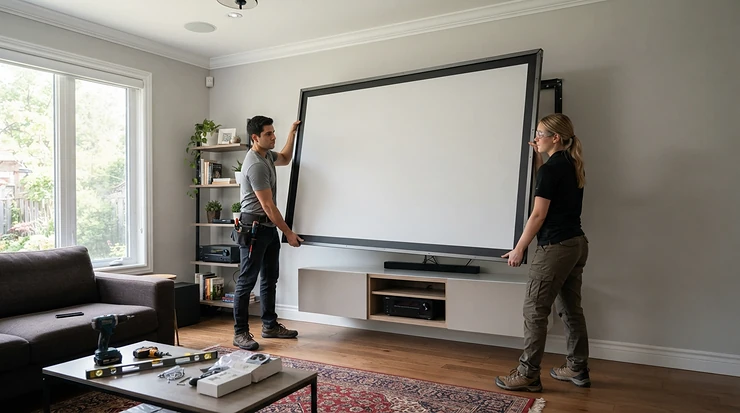
In This Article
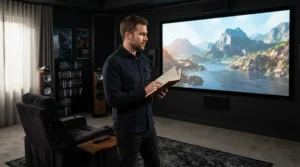
Picture a proper cinema. The dialogue comes from the actor’s mouth, not from a soundbar wedged beneath the picture like an afterthought. That trick is the whole reason an acoustically transparent projector screen exists: the speakers hide behind the image, and the sound walks straight through it.
Quick answer, for the impatient: an acoustically transparent projector screen is a projection surface, woven or micro-perforated, with enough tiny gaps for sound to pass through with little loss. That lets you tuck your left, centre and right speakers behind the picture, so voices appear to come from the actors on screen.
Sounds like magic. It is engineering, and every version involves a trade. Stewart Filmscreen, a long-standing cinema screen maker, points out that the gaps that let sound through can also show up as moiré or visible texture if you sit too close, so the choice of material matters far more than the marketing suggests.
This guide is built for UK buyers. It compares seven real screens, explains the woven acoustic projector screen versus perforated projector screen argument without the jargon fog, and translates perforation pattern, sound attenuation and speaker placement behind screen into plain decisions you can act on. It is also an honest acoustically transparent screen review round-up: where I could not verify real owner feedback, I say so rather than invent it. Prices are given as ranges only, so check current prices on amazon.co.uk before you buy.
Quick Comparison: The Best Acoustically Transparent Projector Screen Options at a Glance
| Product | Surface type | Claimed gain | Best for |
|---|---|---|---|
| Elite Screens Aeon CineWhite A8K | Fine woven, black-backed | 1.1 | Dark, dedicated cinema rooms |
| Elite Screens Aeon AcousticPro UHD | Perforated weave | About 1.0-1.1 | 4K projectors with a bright picture |
| Elite Screens Aeon CineGrey 3D AT | Perforated ALR | 1.2 | Rooms that are never fully dark |
| Silver Ticket STR-169120-WVS | Woven, black-backed | 1.1 | Value-minded DIY builders |
| Acoustic Transparent Weave Fixed Frame Screen (92 inch) | Woven, unbranded | Not stated | Small rooms and tight budgets |
| Grandview Cyber Series Tab Tensioned Acoustic | Woven, motorised | 1.1 | Living rooms that double as cinemas |
| Screen Excellence Enlightor Neo | Premium woven | Low (reviewers note) | Serious, bespoke installs |
Read the table as a map of compromises rather than a league table. The Elite Screens Aeon CineWhite A8K and Silver Ticket STR-169120-WVS both chase the same goal, a smooth woven surface with minimal treble loss. The Elite Screens Aeon CineGrey 3D AT swaps some sonic purity for the ability to cope with ambient light, and the Screen Excellence Enlightor Neo sits at the far end for buyers who treat their room like a studio.
💬 Just one click — help others make better buying decisions too!😊
Top 7 Acoustically Transparent Projector Screen Picks: Expert Analysis
Every entry below rests on published specifications, manufacturer claims (labelled as such) and reviewer sentiment from real sources. None of it is hands-on testing, and none of it is invented.
Before the full write-ups, here is how the seven stack up on the hard numbers that actually change a buying decision: mounting style, viewing angle and the rough size range you can order in.
| Product | Surface style | Mount | Viewing angle | Size range | Price band |
|---|---|---|---|---|---|
| Elite Screens Aeon CineWhite A8K | Woven | Fixed frame | 170° | 103-158 inch | Low-to-mid four figures |
| Elite Screens Aeon AcousticPro UHD | Perforated | Fixed/electric | Wide | 100-200 inch | Mid-to-upper four figures |
| Elite Screens Aeon CineGrey 3D AT | Perforated ALR | Fixed frame | 90° | 100-120 inch | Mid four figures |
| Silver Ticket STR-169120-WVS | Woven | Fixed frame (DIY) | 160° | 110-220 inch | Low-to-mid hundreds/low thousands |
| Acoustic Transparent Weave Fixed Frame Screen (92 inch) | Woven | Fixed frame (DIY) | 160° | 72-180 inch | Low hundreds |
| Grandview Cyber Series Tab Tensioned Acoustic | Woven | Motorised, tab-tensioned | Wide | Up to roughly 9ft wide | Four figures |
| Screen Excellence Enlightor Neo | Woven | Bespoke fixed frame | Wide | Custom | Premium, quote-based |
Line these numbers up against your room and two things jump out: the viewing angle on the Elite Screens Aeon CineGrey 3D AT is noticeably tighter than the rest, which matters if your sofa is wide, and the size ranges on the Silver Ticket STR-169120-WVS and the unbranded weave screen dwarf the others, so they flex to almost any wall. Price bands widen sharply once you reach the Grandview Cyber Series Tab Tensioned Acoustic and Screen Excellence Enlightor Neo, which is the cost of motorisation and bespoke sizing rather than a jump in raw acoustic performance.
1. Elite Screens Aeon CineWhite A8K — best all-round woven pick
The standout here is the balance: a smooth surface that behaves itself acoustically without turning the image into porridge.
The fabric is an ultra-fine knitted weave with a claimed 1.1 gain, a 170-degree viewing angle and ISF certification, mounted on an edge-free frame with a bonded black backing. In practice, the fine weave is what keeps moiré at bay on 4K projectors, while the backing stops light punching through and lighting up the wall behind. Because it does not reject ambient light, treat it as a dark-room screen.
Based on the specifications, it suits anyone building a dedicated cinema who wants in-wall or behind-screen speakers without paying installer-grade money. Projector Reviews, an independent site, highlighted its colour accuracy and sound transparency and noted it is quite affordable compared with other high-quality acoustic surfaces. Verified UK owner reviews were harder to pin down, so read recent amazon.co.uk feedback yourself.
Pros:
- ✅ Fine weave keeps moiré away on high-resolution projectors
- ✅ Edge-free frame looks like a giant flat panel
- ✅ Ultra-short-throw friendly, so centre speakers fit behind
Cons:
- ❌ No ambient light rejection, so darkness is mandatory
- ❌ Fixed frame only, no motorised option
Price: typically low-to-mid four figures for cinema sizes; check current price. Verdict: strong value for what it does.
2. Elite Screens Aeon AcousticPro UHD — brightest of the perforated weaves
Here the pitch is efficiency: Elite claims around 1% light loss, which is unusually low for a surface with holes in it.
The dense perforated weave targets ultra-high-definition projectors and, according to the maker, holds a neutral 6500-7000K colour temperature. What that means for you is a brighter image from a modest projector, at the cost of a slightly steeper treble roll-off than the woven options. It is not compatible with ultra-short or short-throw projectors, so check your projector type first.
For a buyer with a 4K standard-throw projector and speakers that can take a little EQ, the maths works. On AVForums, one buyer described a tight weave with no manufacturing faults and only modest attenuation that room EQ could sort out. That is one forum voice, not a statistical survey, so treat it as a pointer.
Pros:
- ✅ Very low claimed light loss for a perforated surface
- ✅ Wide sizes from roughly 100 to 200 inches
- ✅ Suits 4K standard-throw projectors
Cons:
- ❌ Not compatible with short or ultra-short throw
- ❌ More treble loss than woven rivals
Price: mid-to-upper range for the size; check current price. Verdict: good value if your projector is standard throw.
3. Elite Screens Aeon CineGrey 3D AT — the light-rejecting oddball
This one exists because most people do not own a bat cave. It pairs an angular-reflective ambient light rejecting surface with perforations for sound.
The claimed 1.2 gain and 90-degree viewing angle tell the story: brightness gets steered towards the seats rather than sprayed around the room, so a lit lounge stays watchable. The catch is the narrow sweet spot, so sit off to the side and the picture dims. It is also strictly for standard-throw projectors.
On paper it suits open-plan living rooms where the curtains do only half the job. Independent, detailed reviews of this specific AT variant were thin in my research, so I would not lean on the marketing alone. Test the viewing-angle claim against your own seating plan before ordering.
Pros:
- ✅ Ambient light rejecting surface helps in brighter rooms
- ✅ ISF-certified for accurate colour
- ✅ Perforated for in-wall speakers
Cons:
- ❌ Narrow viewing cone for wide seating
- ❌ Standard-throw projectors only
Price: mid range in the sizes offered (100-120 inch); check current price. Verdict: sensible only for lit rooms.
4. Silver Ticket STR-169120-WVS — value woven with a tension rod trick
The hook is the Silver Ticket tension rod system, which is meant to ease assembly of the six-piece frame.
The woven surface carries a 1.1 gain and a black backing, and the maker claims a very fine weave so viewers can sit closer without seeing texture. The velvet-wrapped aluminium frame soaks up overspill light, which forgives slightly wobbly projector alignment. Sizes run from 110 up to 220 inches in 16:9.
It suits confident DIYers on a budget. One caution: independent reviews I found cover the wider STR fixed-frame range rather than this acoustic weave specifically, and UK stock and delivery vary, so confirm availability and shipping before getting attached.
Pros:
- ✅ Black backing included with the woven surface
- ✅ Velvet-wrapped frame absorbs stray light
- ✅ Huge choice of sizes
Cons:
- ❌ Self-assembly takes patience and two pairs of hands
- ❌ UK availability needs checking
Price: mid range for the size; check current price. Verdict: value if you can source it locally.
5. Acoustic Transparent Weave Fixed Frame Screen (92 inch) — the budget gamble
Unbranded, aluminium framed and cheap, this amazon.co.uk listing is the entry ticket into behind-the-screen audio.
The listing describes a PVC weave surface, a 6.5cm flocked frame border, a 160-degree viewing angle and multiple sizes from 72 to 180 inches. That flocking helps with stray light, and the listing notes the frame may arrive in two pieces you join together. Odd details, such as an unusual format field, are a reminder to read the small print.
For a spare room, a first projector or a bedsit cinema, it is a fair experiment. I could not verify meaningful independent reviews, so treat sound and image claims as unproven and lean on Amazon’s returns policy if it disappoints.
Pros:
- ✅ Lowest entry cost of the seven
- ✅ Flocked frame border cuts glare
- ✅ Wide size range from small to large
Cons:
- ❌ Unbranded, so consistency is unproven
- ❌ No independent measurements to lean on
Price: usually low hundreds; check current price. Verdict: cheap enough to try, not one to bank on.
6. Grandview Cyber Series Tab Tensioned Acoustic — cinema quality that rolls away
Motorisation is the headline: the screen disappears into its case when the film ends and the room goes back to being a lounge.
Tab tensioning pulls the material taut from the sides as well as by the bottom bar, which protects flatness better than a plain roller. The woven acoustic material is rated at 1.1 gain, uses Somfy motors and sizes run to about 9 feet wide. Some retailers list a perforated variant too, so read the description carefully. Also note one UK retailer states this acoustic version has no black backing, which matters if a TV sits behind it.
A retailer write-up (so treat it as friendly, not independent) says it looks as good as non-acoustic screens. On the specifications, it suits families who want speakers hidden and a room that reverts to normal.
Pros:
- ✅ Motorised with remote and 12V trigger
- ✅ Tab tensioning keeps the surface flat
- ✅ Quiet Somfy motor
Cons:
- ❌ Costs several times the budget options
- ❌ Backing may not be included, so check
Price: roughly four figures and up; a 2019 retailer write-up cited around £1,300, so expect variation. Verdict: premium, but justified for living-room conversions.
7. Screen Excellence Enlightor Neo — the audiophile end of the market
The pitch is acoustic purity: the maker claims less than 1dB loss across the whole audio band.
Enlightor Neo is a woven surface sold in bespoke fixed frames with velvet borders and woven black backing. Those claims come from the manufacturer, so weigh them accordingly, but older independent reviews of the earlier Enlightor 4K fabric, in the US and the UK, praised its smooth, dense weave and warned that its lower gain wants a bright projector.
It suits serious installs where left, centre and right speakers get proper attention. Pricing is by quotation, which is usually a sign that this is not a casual purchase.
Pros:
- ✅ Claimed sub-1dB attenuation across the range
- ✅ Custom sizes and masking options
- ✅ Moiré-free weave for high-resolution projection
Cons:
- ❌ Quote-led pricing, no quick checkout
- ❌ Low gain needs a bright projector
Price: premium and quote-based; enquire for current pricing. Verdict: worth it only if the room and speakers deserve it.
How to Choose an Acoustically Transparent Projector Screen
Work through these seven steps in order and most of the mystery falls away.
- Start with the room, not the screen. A dark, treated room can use any surface; a lit lounge needs the CineGrey approach or tougher projector brightness.
- Pick your projector type. Standard-throw models suit most fabrics; ultra-short-throw needs a screen explicitly rated for it.
- Decide woven or perforated. Woven usually loses less treble; perforated usually holds more brightness. More on that below.
- Check your seating distance. Perforation pattern and weave texture show more from close range, so a smaller room needs a finer surface.
- Budget for the projector’s lumens. Acoustic fabrics rarely offer high gain, so a brighter projector is the fix.
- Confirm black backing. Without it, light leaks through and the wall behind glows.
- Plan speakers early. Depth behind the screen decides how much sound attenuation and comb filtering you will tolerate.
Perforated Projector Screen vs Woven Acoustic Projector Screen
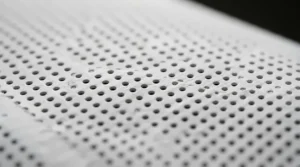
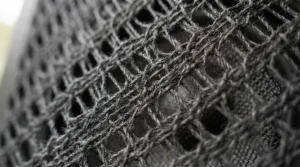
Here is the debate in its natural habitat. A woven acoustic projector screen uses a fabric whose weave leaves microscopic gaps; a perforated projector screen is a solid sheet (usually vinyl) punched with thousands of tiny holes.
According to Simple Home Cinema, woven materials tend to cause fewer acoustic problems, with less high-frequency loss and less comb filtering, so they let speakers sit closer to the screen. Perforated sheets, by contrast, often keep brightness and contrast better, with gains that can reach around 1.0 or more, though speakers usually want more distance behind them. Woven fabrics scatter more light, so their reflectance is often lower.
| Feature | Woven acoustic | Perforated | Standard opaque screen |
|---|---|---|---|
| Treble loss | Lower | Higher | Not applicable |
| Brightness | Often lower | Often higher | Highest |
| Speaker distance needed | Closer | Further | Speakers beside or below |
| Texture risk | Weave visible when close | Holes visible when close | None |
| Best for | Sound-first rooms | Picture-first rooms | Small budgets |
The pattern is clear: woven wins on sound, perforated wins on light, and an ordinary opaque screen wins on cost and simplicity. If your room is tight from front to back, the woven column is the sensible one, because it forgives close-mounted speakers. If your projector is on the weak side, the perforated column may rescue the picture, provided you can pull the speakers away from the surface.
Acoustically Transparent Screens vs Traditional Opaque Screens: What You Actually Gain
It is worth being blunt about what an acoustic screen buys you over a normal opaque one, because the extra cost and hassle are real.
| Aspect | Acoustically transparent screen | Traditional opaque screen |
|---|---|---|
| Speaker placement | Behind the picture, centred | Beside, above or below the picture |
| Dialogue localisation | Voices track the on-screen action | Sound can feel detached from the image |
| Typical cost | Higher, plus speaker planning | Lower, simpler to install |
| Room preparation | Needs black backing and rear treatment | Minimal preparation |
| Best for | Dedicated home cinemas | Casual or budget-first setups |
Lumina Screens’ guide to acoustic transparency makes the case well: putting speakers directly behind the picture gives accurate dialogue localisation and a more balanced sound field than a non-transparent screen forces on you, where speakers end up off to the side or underneath. That is the entire point of the extra spend, and it is worth confirming your room can actually deliver it, meaning enough depth behind the screen for real speakers, not just a soundbar squeezed into the gap.
✨ Don’t miss the right screen for your setup! 🎬 Compare the models above against your own room and projector before you commit, and click through to check today’s availability while stock and sizing suit your wall.
Perforation Pattern and Sound Attenuation: What the Numbers Really Mean
Perforation pattern sounds like trainspotting for cinema nerds, yet it decides a lot. Fewer, larger holes let more light leak; smaller, denser ones behave better, though only up to a point.
For scale, Sound & Vision magazine reported that Stewart Filmscreen’s commercial screens use holes of 0.04 inches, roughly 5,500 per square foot. The same report noted that all acoustically transparent surfaces reduce overall level and roll off high frequencies, and that commercial cinemas equalise their front channels to compensate. Stewart said its micro-perforated screens start rolling off around 5-6kHz at about 2dB per octave, while Screen Research claimed its woven surface starts at 10kHz at roughly 1dB per octave.
Why care? Sound attenuation is not one number. A patent document on light-efficient acoustic screens describes conventional perforated PVC as nearly lossless below 1kHz but losing around 8dB at 16kHz. Smaller holes at the same open area transmit better, so pattern size matters more than hole percentage alone. Elite, for its part, describes a generally acceptable reduction as roughly 3-4dB.
The takeaway: treble is what suffers, and treble is easy to fix with EQ. Voices and film scores live mostly below the trouble zone.
Speaker Placement Behind Screen: A Practical Setup Guide
Speaker placement behind screen is the transformation that makes all of this worthwhile, and it is where good screens get wasted. A few habits pay off immediately.
Distance and alignment
Keep speakers at least 30cm (about 12 inches) from a perforated surface; 50cm (around 20 inches) is friendlier to comb filtering, according to Simple Home Cinema. Woven surfaces forgive closer positions. Aim the tweeter roughly at seated ear height, and line the centre channel up with where the actors’ faces will appear.
Treat the space behind the screen
Sound that fails to pass through bounces around behind the screen. As the AVS Forum measurement thread explains, unabsorbed energy can build up and come back through as peaks in the frequency response, so absorbent panels behind the screen and on speaker baffles help.
Calibrate, then check the picture
Run room correction or a simple EQ to compensate for high-frequency loss. Then paint or cover the wall behind the screen matt black, or add an acoustically transparent black backing, to stop double images caused by light passing through.
First 30 days checklist
- Re-tension or re-seat the fabric if any ripple appears.
- Dust the surface gently, especially perforated types.
- Re-run calibration after any speaker move.
Common mistake: mounting speakers flush against the fabric. That is where perforated screens sound worst.
Real-World Scenarios: Which Screen Fits Which Room
Three rooms, three answers.
The dedicated basement cinema. Full darkness, treated walls, a 4K standard-throw projector and space behind the screen. The Elite Screens Aeon CineWhite A8K is the natural pick, with the Screen Excellence Enlightor Neo as the indulgent upgrade if the speakers justify it. Budget: four figures and up.
The living room that moonlights as a cinema. Curtains, lamps and a partner who watches the news at teatime. The Grandview Cyber Series Tab Tensioned Acoustic disappears when it is not needed, and the Elite Screens Aeon CineGrey 3D AT helps in brighter conditions. Viewing frequency: a few nights a week.
The student flat or spare bedroom. Small space, small budget, a compact projector. The Acoustic Transparent Weave Fixed Frame Screen (92 inch) costs little enough to be forgivable, while the Silver Ticket STR-169120-WVS suits a slightly larger wall if you can source it. Frequency: weekends.
The lesson: the room, not the spec sheet, decides the winner.
Common Problems and Solutions
Most complaints follow the same few themes, so here is a troubleshooting pass.
Problem: A shimmering, wavy pattern across the picture. That is moiré, an interference between the screen’s pattern and the projector’s pixel grid. Solution: choose a finer weave such as the Elite Screens Aeon CineWhite A8K, or nudge the projector focus slightly.
Problem: A ghost image on the wall behind. Light is passing through the fabric. Solution: add black backing or paint the wall matt black.
Problem: Dull, veiled dialogue. This is treble attenuation. Solution: apply EQ, or move speakers further from perforated fabric.
Problem: A washed-out picture in daylight. Solution: consider the Elite Screens Aeon CineGrey 3D AT or a brighter projector.
Problem: Ripples in the surface. Solution: re-tension, or choose a tab-tensioned design like the Grandview Cyber Series Tab Tensioned Acoustic.
Acoustically Transparent Screen Review: How to Read the Evidence
An acoustically transparent screen review can mislead if you do not know what to look for. Three habits help.
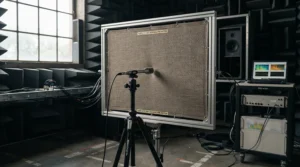
First, separate measurement from opinion. Independent measurements, like the AVS Forum comparison of more than 30 materials, tell you dB loss and sharpness; a pleasant paragraph tells you little. Second, notice who supplies the sample. Several reviews above involved manufacturer-supplied screens, which is not disqualifying but is worth knowing. Third, check the date: fabrics get revised, and the older Enlightor 4K reviews describe a predecessor of today’s Neo, not the current product.
Manufacturer claims deserve a raised eyebrow, too. Advice on Simple Home Cinema warns that reflectance figures higher than 0.8 on woven fabrics tend to be optimistic. Good buyers cross-check.
Features That Actually Matter (And Those That Don’t)
Matter: black backing, fine weave or hole size, tension design, actual measured gain and honest attenuation figures.
Matter less than marketing suggests: an “8K” label (the fabric resolves detail far beyond any projector), tiny differences in claimed viewing angle, and exaggerated gain numbers.
An edge-free frame is a lovely aesthetic touch, yet it changes nothing about sound. Similarly, ISF certification is welcome for colour accuracy but does not guarantee a great acoustic score.
Long-Term Cost and Maintenance
The purchase price is only chapter one. A woven surface may need a new black backing if you change the room, and perforated types need occasional dusting so holes do not clog. Motorised screens add mechanical parts, and Grandview’s use of Somfy motors matters for long-term serviceability.
Consider cost per year: a mid-range fixed frame kept for eight years costs pennies per movie night, while a bargain screen replaced twice ends up dearer. Speakers, room correction software and treatment panels belong in the same budget. Skimp there and even the best screen will underperform.
Safety, Fire Ratings and Room Notes
Elite states that its AcousticPro 4K material complies with NFPA 701 and ASTM E84 flame standards, per a HomeTheaterReview write-up. Those are US standards, so UK buyers should look for maker fire-safety documentation and treat any fabric stretched over a wall with common sense.
Keep fixed frames away from radiators, secure wall brackets into studs or suitable fixings, and mind ceiling clearances (Elite recommends leaving a few inches between bracket and ceiling for lifting the frame). For rented properties, ask the landlord before drilling.
FAQs
❓ Do perforated projector screen materials hurt sound quality?
❓ What is the ideal distance for speaker placement behind screen?
❓ Is a woven acoustic projector screen worth the extra cost?
❓ Can I use an acoustically transparent projector screen with an ultra-short-throw projector?
❓ Do I need a black backing behind an acoustically transparent screen?
Conclusion
An acoustically transparent projector screen is not a gimmick. Done well, it delivers the single most cinematic trick available at home: voices that come from the picture itself.
The shortlist is simpler than it looks. Go woven, as with the Elite Screens Aeon CineWhite A8K or Silver Ticket STR-169120-WVS, when sound and darkness are in your favour. Go perforated, as with the Elite Screens Aeon AcousticPro UHD, when light output matters. Pick the Elite Screens Aeon CineGrey 3D AT for lit rooms, the Grandview Cyber Series Tab Tensioned Acoustic for living rooms, and the Screen Excellence Enlightor Neo for no-compromise builds. If your funds are tight, the Acoustic Transparent Weave Fixed Frame Screen (92 inch) is a cheap experiment.
Whatever you choose, budget time for speaker placement, EQ and black backing. Those unglamorous extras separate a good result from a great one.
Recommended for You
- Fixed Frame Projector Screen: 7 Best Picks For UK Homes (2026)
- Fixed Frame Screen For A Dedicated Cinema Room: 7 Top UK Picks (2026)
- Ultra Short Throw Laser Projector: 7 Best Picks For UK Homes (2026)
Disclaimer: This article contains affiliate links. As an Amazon Associate, I earn from qualifying purchases. If you purchase products through these links, we may earn a small commission at no additional cost to you.
✨ Found this helpful? Share it with your friends! 💬🤗
