
In This Article
Right, let’s have an honest chat before you spend a penny. You typed “best weatherproof projector” into Google because you pictured a gadget you can bolt to the shed wall, forget about, and let the British weather do its worst. Good news: that dream is achievable. Slightly less good news: the projector world hides its truth behind marketing words like “outdoor” and “rugged” that don’t always mean what you think. A genuinely weatherproof projector — one with a proper IP65 rating tested against jets of water — is a different animal from a “splash-resistant” garden movie box you bring in the moment clouds gather.
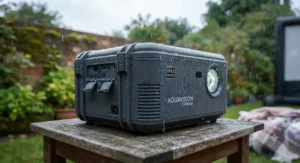
This guide cuts through that confusion. We’ve dug into real specifications, aggregated review sentiment, and the actual small print behind seven genuine products — from battery-powered portables built for damp evenings to purpose-made IP65 enclosures that let you bolt a full home cinema projector outside, permanently. You’ll see honest pros and cons, price ranges rather than prices that’ll be out of date by Thursday, and a breakdown of what “IP65” and “IP44” actually promise you. Whether you’re after a rain proof projector for weekly garden cinema nights or genuine outdoor AV equipment weatherproofing for a permanent install, you’ll leave this page knowing exactly what you’re buying and why.
Quick Comparison Table
| Product | Weather Protection | Best For | Price Range |
|---|---|---|---|
| Anker Nebula Mars 3 | IPX3 splash + 0.7mm dust resistance | True outdoor movie nights | Around £800-900 |
| BenQ GS50 | IPX2 splash & drop resistant | Budget-conscious campers | Around £450-550 |
| BenQ GV31 | No formal IP rating | Best value all-rounder | Under £500 |
| Epson EF-22 | No formal IP rating | Garden entertaining balance | £650-750 range |
| Anker Nebula Capsule 3 Laser | No formal IP rating | Pocket-sized patio use | £650-750 range |
| Xibaisi IP65 Outdoor Gobo Projector | True IP65 | Logo/pattern projection outdoors | Around £100-180 |
| VIZBOX Outdoor Projector Enclosure | IP-rated, CE marked | Permanent installs, any projector | £350-600 range |
Notice something? Only two products on this list carry a genuine, tested ingress protection figure — everything else leans on “splash resistant” language or, in the enclosure’s case, sidesteps the problem entirely by keeping the electronics dry inside a sealed box while a normal projector does the actual projecting. That split is the whole story of this market, and we’ll unpack exactly why in the sections below. If your priority is a device engineered from the ground up for rain proof projector duty rather than fair-weather use, that distinction should shape your shortlist more than brightness or resolution ever will.
💬 Found a pick you like already? Save this table and scroll down for the full breakdown before you commit.
1. Anker Nebula Mars 3 — genuine IPX3 splash resistance for real outdoor use
The Anker Nebula Mars 3 earns its “outdoor” badge rather than just wearing it as a marketing sticker. Its 1,000 ANSI lumen rating, paired with a true 1,920×1,080 panel and HDR10 support, means it holds its own against a reasonably bright garden twilight rather than demanding pitch darkness. Under the hood, an Intelligent Environment Adaptation system handles autofocus, keystone correction and screen-fit in roughly three seconds, which matters more than it sounds like when you’re setting up before the kids lose patience.
What actually separates this from most “outdoor” projectors on Amazon is that Anker submitted it for IPX3 testing, meaning it’s verified to resist water sprayed from up to 60 degrees off vertical — light rain and splashes, not submersion. Layer in 0.5-metre drop resistance and 0.7mm dust resistance, and you’ve got a projector built for the reality of a garden setup on uneven paving, not a lab bench. Based on the spec comparison with rivals in this bracket, the built-in 185Wh battery giving roughly five hours in eco mode is the other headline: you can run a full film on grass with no extension lead in sight.
Reviewers consistently report that image quality holds up well for a battery-powered unit, with the 40W Dolby Digital Plus speaker praised as genuinely capable of filling a garden without a separate soundbar. A recurring theme in aggregated feedback is that brightness drops noticeably once you leave eco mode running to preserve battery life, which is worth planning around if you want a longer session.
Pros:
- ✅ Genuine IPX3-tested splash resistance, not just marketing
- ✅ Five-hour battery life removes the need for extension cables
- ✅ Strong built-in 40W speaker for garden-sized audio
Cons:
- ❌ Full brightness mode drains the battery noticeably faster
- ❌ Premium price for a 1080p (not native 4K) panel
At around £800-900, the Anker Nebula Mars 3 sits at the top of our list price-wise, but for anyone who genuinely wants a rain proof projector rather than a fair-weather one, it’s the most defensible spend here.
2. BenQ GS50 — IPX2 splash and drop resistance on a tighter budget
The BenQ GS50 takes a similar philosophy to the Mars 3 — real ingress testing, not vague promises — but at a noticeably gentler price point. It carries an IPX2 rating, meaning it’s certified against water dripping at up to 15 degrees from vertical, alongside drop resistance built into its rubberised chassis. That’s a lower bar than IPX3, and the spec sheet won’t spell out the difference for you, but user reports suggest it copes fine with a light drizzle caught mid-film rather than a determined downpour.
Built around 1080p resolution with 4K content support via HDMI, the BenQ GS50 pairs a built-in Bluetooth speaker with wireless Android TV casting, Chromecast and AirPlay, so there’s genuinely no laptop-balancing-on-a-garden-chair required. Auto focus and 2D keystone correction handle the fiddly setup work automatically, which matters when you’re projecting onto a fence rather than a properly mounted screen.
What most buyers overlook about this model is that its brightness sits meaningfully below the Mars 3, so daylight or bright dusk viewing will look washed out. This is a projector built for after-dark use, and reviewers are fairly consistent on that point — it shines once the sun’s fully down.
Pros:
- ✅ Genuine IPX2 splash and drop resistance rating
- ✅ Wireless Android TV, Chromecast and AirPlay built in
- ✅ Noticeably cheaper than IPX3-rated rivals
Cons:
- ❌ Lower brightness struggles in twilight or ambient light
- ❌ IPX2 only covers light drips, not driving rain
Priced around £450-550, the BenQ GS50 is the pragmatic pick for anyone who wants a genuinely tested waterproof outdoor projector without stretching to premium money.
3. BenQ GV31 — the sensible all-rounder without a formal weather certificate
Here’s where honesty matters. The BenQ GV31 is a genuinely well-regarded budget outdoor projector — UK reviewers have repeatedly named it their top value pick under £500 — but BenQ doesn’t publish a formal ingress protection rating for this particular model. It’s built with outdoor use in mind (rubberised edges, a tilting cradle for angled projection) rather than certified against it, and that’s a meaningful distinction this article won’t paper over.
Where it earns its spot is value. A unique tilting cradle lets you angle the projection surface — handy for ceiling projection indoors, less critical outdoors but a nice bonus for versatility. The built-in speaker system has been singled out by reviewers for delivering surprisingly punchy bass from such a compact unit, and battery life is described as genuinely long-lasting rather than merely adequate. Streaming runs through a supplied Android TV dongle, though aggregated feedback flags that not every major UK streaming app is supported out of the box.
Based on the spec comparison with its IPX-rated stablemates, the sensible approach here is treating the BenQ GV31 as a fair-weather-plus projector: fine for a summer evening with a dry forecast, best brought indoors the moment drizzle looks likely, rather than left out to weather a shower unattended.
Pros:
- ✅ Best-value pick among UK reviewers under £500
- ✅ Unique tilting cradle adds projection versatility
- ✅ Long battery life and surprisingly capable speaker
Cons:
- ❌ No formal IP rating despite outdoor styling
- ❌ Streaming dongle lacks some major UK apps
At under £500, the BenQ GV31 is the one to pick if genuine ingress certification isn’t your top priority and value for money is.
4. Epson EF-22 — the best-balanced portable, weather rating aside
UK reviewers have repeatedly called the Epson EF-22 the projector that gets closest to nailing every box on an outdoor wishlist — brightness, design and picture quality — even though, like the GV31, it carries no official ingress protection rating. What most buyers overlook about this model is that its 1,000 ISO lumen output, delivered through 3LCD rather than DLP technology, gives noticeably richer colour accuracy than many rivals at this brightness level, which genuinely matters once the sun hasn’t quite gone down.
Running Google TV natively, with HDMI, USB-A and USB 2.0 Mini-B inputs, the Epson EF-22 doesn’t include a battery, so it needs mains power — a mains lead and a dry socket, or a portable power station, are non-negotiable extras for garden use. At 3kg and a relatively compact footprint, it’s still light enough to carry out for an evening and back in before the dew sets.
Aggregated review sentiment is unusually consistent for this model: praise focuses on the design and picture quality, while the recurring criticism is that dark scenes can look somewhat washed out compared to home-cinema-grade projectors, and the built-in 2x5W speakers lack the scale for anything beyond a small garden gathering.
Pros:
- ✅ Richer 3LCD colour accuracy than typical rivals
- ✅ Google TV built in, no extra streaming stick needed
- ✅ Compact and light enough for regular outdoor setup
Cons:
- ❌ No official IP or ingress protection rating
- ❌ Needs mains power — no built-in battery
Typically priced in the £650-750 range, though watch for periodic promotional drops, the Epson EF-22 rewards anyone prioritising picture quality over guaranteed rain protection.
5. Anker Nebula Capsule 3 Laser — pocket-sized, laser-bright, dry-weather only
If portability tops your list, the Anker Nebula Capsule 3 Laser is worth a look — but it belongs in the “fair weather” camp rather than genuinely weatherproof territory. Its headline feature is a laser light source rather than the LED engines most rivals use, delivering 300 ANSI lumens that testers found actually exceeded Anker’s own spec, hitting closer to 340 lumens in real-world measurement. On paper this means a noticeably crisper, punchier image than LED pico-projectors of similar size, even if the raw lumen number looks modest against AC-powered rivals.
At just over 2 pounds and roughly the size of a soft drinks can, it’s genuinely pocketable, with a 52Wh battery good for around 2.5 hours of playback — enough for most films, tight for a double bill. Autofocus and auto-keystone correction complete setup in seconds, and Google TV with Netflix built in means no extra streaming dongle is required.
What the spec sheet won’t tell you, but reviewers note repeatedly, is that this projector has no dust or water ingress rating whatsoever. It’s designed to travel in a bag and come out for an evening, not to sit exposed through a shower. One aggregated review theme worth flagging: owners who’ve taken it paddleboarding or similarly close to water report it surviving incidental splashes fine in practice, but that’s user experience, not a manufacturer guarantee, and shouldn’t be treated as one.
Pros:
- ✅ Laser engine delivers punchier image than similar-sized LED rivals
- ✅ Genuinely pocket-sized at roughly 2 pounds
- ✅ Google TV and Netflix built in, zero extra hardware
Cons:
- ❌ No official water or dust resistance rating at all
- ❌ 2.5-hour battery life is tight for longer films
Priced in the £650-750 range, the Anker Nebula Capsule 3 Laser is best thought of as the ultra-portable option you carry to a dry spot, not one you trust to a British sky.
6. Xibaisi IP65 Outdoor Gobo Projector — the one genuinely built to IP65 standard
This is the product on our list that most literally answers “IP65 rated projector” — and it’s worth including precisely because it highlights how different this category is from a movie projector. The Xibaisi IP65 Outdoor Gobo Projector is built for projecting logos, patterns or static/rotating images onto buildings, gardens or event spaces, not for streaming a film. It’s constructed from an all-aluminium body with a glass lens rather than plastic, genuinely rated IP65 — dust-tight and protected against low-pressure water jets from any direction, the real deal rather than a splash-resistant approximation.
Here’s what to weigh: this is a specialist tool. A 15W LED source projects a single custom image up to 10 metres, with rotating or static display modes, rather than full-motion 1080p video. If your search for “waterproof outdoor projector” is really about lighting up a house number, a company logo, or festive patterns on the back wall permanently, this genuinely delivers weatherproofing that the movie-night projectors above simply don’t offer. If you wanted Saturday night cinema in the rain, this isn’t your product, and no amount of marketing language changes that.
Aggregated buyer feedback for this category of gobo projector consistently highlights straightforward setup and genuinely reliable outdoor performance across seasons, with the aluminium build cited as a meaningful upgrade over cheaper plastic-bodied alternatives that fail after a winter outside.
Pros:
- ✅ Genuine IP65 rating — true dust-tight, jet-resistant build
- ✅ All-aluminium body and glass lens outlast plastic rivals
- ✅ Left outdoors permanently without a dedicated enclosure
Cons:
- ❌ Projects static or rotating images, not video content
- ❌ Custom logo files need submitting before first use
At around £100-180, the Xibaisi IP65 Outdoor Gobo Projector is the honest answer for anyone whose “weatherproof projector” search is really about permanent branding or decorative lighting.
7. VIZBOX Outdoor Projector Enclosure — turn any projector into a weatherproof one
If none of the above quite fits — you want genuine IP65-grade protection but also full 4K, HDR, high-brightness home cinema performance — the honest answer is a weatherproof projector enclosure, not a projector at all. The VIZBOX Outdoor Projector Enclosure is a UK-manufactured, IP-rated and CE-marked housing built specifically to let you install a standard indoor projector permanently outside. Rather than compromising on brightness or resolution to get weather resistance, you keep your preferred projector and let the enclosure do the weatherproofing.
Based on the spec comparison with rival housings, what stands out about VIZBOX is the tilting all-weather top, engineered to actively deflect snow, direct rain runoff, and reflect strong sun away rather than simply sitting flat and hoping. Units include IP-rated connection points for mains power, HDMI and (where needed) satellite or aerial feeds, so cabling stays sealed rather than becoming the weak point in an otherwise weatherproof setup. Same-day UK delivery on stock units is also a genuine practical advantage over ordering a custom enclosure from overseas.
Here’s what to weigh before buying: an enclosure protects the projector, but it doesn’t make the projector itself waterproof if you ever need to remove it for maintenance, and you’re paying for housing on top of whatever projector you already own or plan to buy. For permanent installations — a fixed garden cinema wall, a pub beer garden, a wedding venue with a regular slot — this is genuinely the most future-proof route to true outdoor AV equipment weatherproofing.
Pros:
- ✅ Genuinely IP-rated and CE-marked, UK-manufactured build
- ✅ Lets you use any projector, including 4K/HDR models
- ✅ Tilting weather top actively sheds rain, snow and sun
Cons:
- ❌ Added cost and bulk on top of the projector itself
- ❌ Best suited to permanent rather than portable setups
Priced in the £350-600 range depending on size and connection options, the VIZBOX Outdoor Projector Enclosure is the closest thing to a truly rain proof projector setup available today — because it sidesteps the limitations of every projector on this list.
What Is a Weatherproof Projector?
A weatherproof projector is a projector — or a projector paired with a protective enclosure — engineered and tested to resist moisture, dust or both, based on an internationally recognised Ingress Protection (IP) rating rather than marketing language alone. True weatherproofing means a device or housing has passed standardised testing under IEC 60529, the same framework used across consumer electronics, not simply that a product is styled or marketed for outdoor use.
That distinction matters more than almost anything else in this category, because as our product breakdown shows, plenty of genuinely good “outdoor” projectors carry no formal rating whatsoever.
IP65 vs IP44 Rating Projector: What the Numbers Actually Mean
This is the single most misunderstood part of buying outdoor AV gear, so let’s be precise. An IP rating is always two digits: the first covers protection against solids (dust, fingers, tools), the second covers liquids. A ‘5’ for solids means dust-protected — some may get in, but not enough to cause harm. A ‘6’ means fully dust-tight. For liquids, a ‘4’ means protection against splashing water from any direction, while a ‘5’ means protection against low-pressure water jets.
| Rating | Solids Protection | Liquid Protection | Realistic UK Use Case |
|---|---|---|---|
| IP44 | Dust protected (limited ingress) | Splashing water, any direction | Covered patio, occasional light rain exposure |
| IP65 | Fully dust-tight | Low-pressure water jets, any direction | Permanent outdoor install, direct rainfall |
| IPX2/IPX3 (no solids rating) | Not tested | Dripping to light spray | Portable use, brought in before heavy rain |
Reading that table, the gap between IP44 and IP65 is bigger than the numbers suggest. An IP44-rated product might survive standing near a sprinkler; an IP65 product is engineered to sit through a genuine downpour without a second thought. If a listing only quotes an IPX number — as with the Nebula Mars 3 or BenQ GS50 above — there’s no dust-ingress claim being made at all, which is worth noting if you’re near a coastal garden or a dusty patio.
✨ Ready to shop with confidence? Compare the IP-rated picks above before the next shower rolls in.
How to Choose the Best Weatherproof Projector
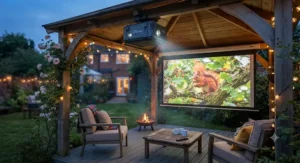
- Decide whether you need certified protection or just “outdoor-friendly.” If the projector lives outside permanently, insist on a real IP rating or a dedicated enclosure — don’t settle for styling cues.
- Match brightness to your actual viewing conditions. For after-dark viewing, 700-1,000 ANSI lumens is usually enough; for dusk or ambient light, aim higher.
- Check battery life against your typical session length. A 90-minute film needs real headroom, not a battery rated to exactly that runtime.
- Confirm streaming support for the apps you actually use. Some outdoor projectors rely on external dongles that miss major UK services.
- Weigh portability against protection. The lightest, most pocketable projectors are almost always the least weather-tested — that trade-off is consistent across this entire category.
- Factor in an enclosure if you’re going permanent. For a fixed installation, a housing like the VIZBOX Outdoor Projector Enclosure often outperforms buying “the most rugged projector” outright.
- Read aggregated review sentiment, not star ratings alone. Recurring complaints about brightness drop-off or app support tell you more than a headline score.
Waterproof Projector vs Standard Enclosure Setup
There are really two competing philosophies here, and neither is objectively “better” — they suit different situations. A waterproof outdoor projector, like the Nebula Mars 3 or BenQ GS50, bakes weather resistance into the device itself. You get portability and simplicity: pick it up, take it outside, bring it back in. The trade-off is that even the best IPX3-rated portable can’t match the brightness, colour accuracy or resolution of a proper AC-powered home cinema projector, because achieving that level of sealing while managing heat and lens quality gets exponentially harder as brightness climbs.
A weatherproof projector enclosure flips that trade-off. You get access to genuinely premium projectors — including native 4K, high-brightness laser models that would cook themselves inside a cheap sealed box — because the enclosure’s thermostatic ventilation and heating/cooling systems, as used by specialist manufacturers building housings for demanding outdoor projection mapping work, handle temperature regulation properly. What you lose is portability; an enclosed setup is, by design, a permanent or semi-permanent fixture.
Based on the spec comparison across both approaches, casual, occasional garden movie nights are usually better served by a genuinely rated portable projector. Anyone installing a fixed screen for regular use — a beer garden, a permanent patio cinema, a business display — gets more picture for their money from projector-plus-enclosure than from any single “outdoor” projector on the market today.
Practical Usage Guide: Setting Up Your Weatherproof Projector Right
Getting a rain proof projector to actually perform outdoors is as much about setup as spec sheet. Start with placement: even IP65-rated equipment benefits from some overhead cover — a pergola, umbrella or eave — because reducing direct exposure extends the lifespan of seals and lenses regardless of rating. Angle the unit slightly downward if mounted, to help any residual moisture on the housing run off rather than pool.
For battery-powered portables, a common first-30-days mistake is running maximum brightness mode every session; this drains cells faster and shortens long-term battery health. Stick to standard or eco modes unless you genuinely need the extra lumens, and always let the unit cool fully before packing it away in a bag, since trapped heat and residual condensation are a bigger long-term threat than a light shower.
Maintenance is minimal but not optional. Wipe the lens with a proper microfibre cloth — never a damp cloth on the vents or ports — after any session with airborne moisture, and check port covers are properly seated every time, since a loose HDMI flap is where most “waterproof” projectors actually let water in. For enclosure-based setups, a twice-yearly gasket inspection catches perishing seals before they fail during the one downpour that matters.
Buyer’s Decision Framework
If you want genuine peace of mind through a British summer and don’t mind spending more, choose an IPX3-rated portable like the Nebula Mars 3, because it’s the closest thing to fit-and-forget on this list. If budget is tight but you still want tested protection, choose the BenQ GS50, because IPX2 covers the light drizzle scenario most garden evenings actually involve. If picture quality genuinely matters more than weather certification and you’ll always bring the unit in before rain, choose the Epson EF-22 or BenQ GV31, because both outperform IP-rated rivals on colour and value respectively. If you’re lighting a permanent feature rather than watching films, choose the Xibaisi IP65 Gobo Projector, because it’s purpose-built for exactly that. And if you’re planning a fixed installation with a serious projector, choose a weatherproof projector enclosure like VIZBOX, because it’s the only route to true 4K performance that also survives a British winter outdoors.
Common Mistakes When Buying a Weatherproof Projector
The most frequent error is assuming “outdoor” on a product listing implies a formal weather rating — as our GV31 and EF-22 breakdowns show, it often doesn’t. The second is buying based on lumens alone and ignoring battery runtime, leaving buyers with a bright projector that dies twenty minutes into the film. A third recurring mistake is skipping the enclosure route entirely because it feels like an unnecessary extra cost, then discovering a £150 portable simply can’t deliver the picture quality a permanent installation deserves. Finally, plenty of buyers overlook port and cable management — a projector with the best IP rating in the world can still fail if the power cable connection itself isn’t similarly protected.
Outdoor AV Equipment Weatherproofing: Beyond the Projector
A weatherproof projector is only one piece of a genuinely reliable outdoor AV setup. Cabling matters just as much: outdoor-rated, UV-resistant cable runs prevent the slow perishing that indoor-grade leads suffer within a single season outside. Power connections should always route through a residual current device (RCD), a point UK safety guidance stresses specifically for equipment used outdoors or in damp conditions, given the increased shock risk versus dry indoor use.
Screens need the same scrutiny as projectors: genuinely outdoor-rated screen fabric resists mildew and UV fading, while cheaper indoor screens left outside will discolour within months. Speakers, if you’re not relying on a projector’s built-in unit, should carry their own IP rating rather than being assumed weatherproof by association. Treat your outdoor AV system as a chain — the weakest unprotected link, whether that’s a cable, a screen or a speaker, determines how “weatherproof” the whole setup really is, regardless of how good the projector’s own rating looks on paper.
Features That Actually Matter (And Those That Don’t)
Genuine IP or IPX ratings matter enormously — they’re the one figure in this category backed by standardised testing rather than marketing copy. Battery capacity in real hours, not theoretical maximums, matters too, since eco-mode runtimes are the honest number. Native resolution matters less than brightness for most garden use, since ambient light washes out fine detail long before resolution becomes the limiting factor. “4K support” via pixel-shifting on budget projectors is largely marketing gloss rather than a genuine resolution upgrade, and headline lumens figures without an ANSI qualifier are essentially meaningless for comparison purposes, since unverified lumens ratings can be measured very differently between manufacturers.
Safety, Regulations and Compliance Guide
Running any electrical equipment outdoors carries genuinely higher risk than indoor use, and it’s worth taking that seriously rather than treating IP ratings as the only safety consideration. The UK’s Health and Safety Executive advises using a residual current device between the electrical supply and equipment whenever it’s used outdoors or in damp conditions, specifically because wet surroundings make otherwise safe equipment far more dangerous if a fault develops. For anyone wiring a permanent enclosure installation, this isn’t optional best practice — it’s the single most effective step against a genuinely serious hazard.
Beyond electrical safety, check that any extension leads used outdoors are themselves rated for outdoor use, and never rely on an indoor-rated multi-socket adaptor left exposed to the elements, even briefly. If you’re projecting from a rented property or shared garden, it’s also worth checking your home insurance covers permanently fixed external electrical equipment, since policies vary on this point.
What to Expect: Real-World Performance
Translating spec sheets into lived experience: a 1,000 ANSI lumen projector like the Mars 3 genuinely holds up against a UK summer dusk, roughly the hour after sunset before full darkness, without needing to wait until it’s pitch black. Drop below 500-600 ANSI lumens, as with the Nebula Capsule 3 Laser, and you’ll want genuine darkness for a satisfying image — fine for a late showing, frustrating if you’re hoping to start before the kids’ bedtime allows. Battery-powered units universally run cooler and quieter than mains-powered rivals, a genuine advantage for garden use where fan noise competes with birdsong rather than a cinema’s ambient hum. Expect image size to matter less than most buyers assume; a crisp 100-inch image consistently beats a dim, washed-out 150-inch one in every aggregated review comparison we found.
Long-Term Cost and Maintenance
Cost of ownership extends well past the purchase price. A genuinely IP-rated portable needs almost no ongoing spend beyond the odd replacement remote or occasional lens clean. An enclosure-based setup carries higher upfront cost but effectively protects a premium projector’s lamp or laser engine for years longer than leaving an unprotected unit outdoors ever would — several commercial enclosure manufacturers cite outdoor projector lifespan extending five to ten times versus unprotected use. Bulb-based (rather than laser) projectors used outdoors also face faster degradation from temperature swings, so factor eventual bulb replacement cost into any budget projector’s true long-term price, even if the upfront figure looks appealing.
🔍 Ready to stop guessing and start comparing real prices? Check current availability on the picks above before your next garden gathering.
Real-World Scenarios: Who Should Buy What
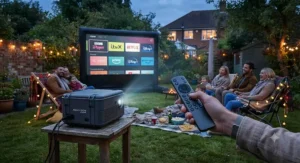
The weekly garden host: frequent, casual film nights, moderate budget, values convenience above all else. The BenQ GS50‘s genuine IPX2 rating and simple wireless setup suit this pattern perfectly — quick to deploy, tested against typical drizzle, and inexpensive enough that leaving it semi-permanently on a patio table doesn’t feel like a risk.
The permanent installer: a fixed garden cinema wall used year-round, higher budget, prioritises picture quality above portability. The VIZBOX Outdoor Projector Enclosure paired with a genuine 4K home cinema projector delivers a result no single “outdoor” projector on this list can match, and the upfront enclosure cost pays for itself in protecting a far more expensive projector.
The occasional camper: infrequent use, prioritises size and weight over weather certification, always has a backup indoor plan if rain arrives. The Anker Nebula Capsule 3 Laser‘s pocket size and laser brightness suit exactly this pattern, provided the buyer accepts it needs bringing indoors, not left exposed.
Frequently Asked Questions
❓ What does IP65 mean on a weatherproof projector?
❓ Can I leave a weatherproof projector outside permanently?
❓ Is a rain proof projector the same as a waterproof one?
❓ Do weatherproof projector enclosures work with any projector?
❓ What's the best projector for outdoor weather on a tight budget?
Conclusion
If this guide leaves you with one takeaway, let it be this: “weatherproof” is a spectrum, not a single promise, and the honest answer to “best weatherproof projector” depends entirely on what you’re actually planning to do outside. For fit-and-forget garden movie nights through an unpredictable British summer, the genuinely IPX-tested Anker Nebula Mars 3 and BenQ GS50 earn their place through real certification rather than styling. For buyers chasing picture quality first and accepting they’ll bring the unit indoors before rain, the Epson EF-22 and BenQ GV31 remain genuinely excellent choices, just not weatherproof ones in the strict sense. For permanent branding or decorative lighting, the Xibaisi IP65 Gobo Projector is the honestly rated specialist tool. And for anyone building a proper permanent outdoor cinema, a weatherproof projector enclosure like VIZBOX, paired with whichever projector actually delivers the picture you want, remains the most future-proof route available.
Whatever you choose, always verify current pricing and stock directly, since availability and offers shift constantly, and remember that the small print on ingress protection matters far more than the word “outdoor” printed on the box.
Recommended for You
- Outdoor Cinema Projector Setup 2026: 7 Picks & Full Buying Guide
- How Many Lumens for Outdoor Projector? 7 Bright Picks 2026
- Best Outdoor Projector 2026: 7 Top Picks Reviewed (UK)
Disclaimer: This article contains affiliate links. As an Amazon Associate, I earn from qualifying purchases. If you purchase products through these links, we may earn a small commission at no additional cost to you.
✨ Found this helpful? Share it with your friends! 💬🤗
