
In This Article
Somewhere between the death of the family DVD shelf and the rise of the 85-inch telly, a quiet rebellion has been brewing in British living rooms: people are going bigger by going back to projectors. Not the wheezy conference-room beige boxes your school used for assemblies, mind — modern DLP tech has turned into something genuinely covetable, throwing crisp, colour-rich pictures onto a blank wall for a fraction of what an equivalent flat-panel telly would cost per inch. If you have been down the rabbit hole of forum threads and spec sheets trying to find the best DLP projector for your space, you have probably noticed the market is stuffed with jargon, inflated marketing claims and prices that vanish the moment you click “buy.” This guide cuts through that.
We researched real, currently available models from Optoma, BenQ, XGIMI, Anker, Valerion and Hisense, drawing on aggregated review data and manufacturer specifications rather than guesswork, to find genuinely good DLP projectors across budget, mid-range and premium price points. Every model on this list has actually shipped, actually been reviewed, and actually holds up under scrutiny — no invented “best sellers” here. Whether you are chasing the best DLP projector for movies in a blacked-out media room, a portable option for garden film nights, or an ultra-short-throw beast to replace your telly entirely, there is something below that fits.
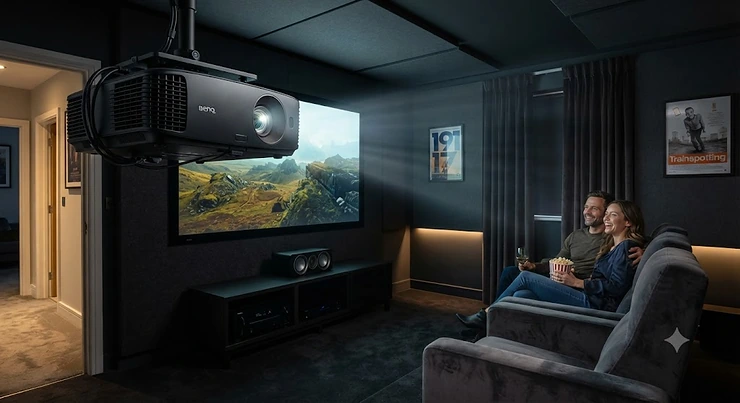
So, what is a DLP projector? Digital Light Processing (DLP) is a projection technology built around a Digital Micromirror Device (DMD) — a chip covered in millions of microscopic, individually tilting mirrors that flick light towards or away from the lens thousands of times a second to build an image. It is prized for sharp, artefact-free images, deep blacks and long-term reliability, and it now underpins everything from £450 pocket projectors to premium 4K home cinema rigs.
Quick Comparison Table
| Projector | Resolution | Brightness | Best For |
|---|---|---|---|
| Anker Nebula Capsule 3 | 1080p | 200 ANSI lumens | Budget portability |
| Optoma UHD38x | 4K UHD (pixel-shift) | 4,000 ANSI lumens | Budget gaming & movies |
| BenQ W2720i | 4K UHD (pixel-shift) | 2,500 ANSI lumens | Dedicated home cinema |
| Valerion StreamMaster Plus 2 | 4K UHD (pixel-shift) | 2,000 ISO lumens | Mid-range value laser |
| XGIMI Horizon 20 Pro | 4K UHD (pixel-shift) | 4,100 ISO lumens | Flexible living-room upgrade |
| XGIMI Horizon 20 Max | 4K UHD (pixel-shift) | 5,700 ISO lumens | Bright-room lifestyle projection |
| Hisense PX3-Pro | 4K UHD (pixel-shift) | 3,000 ANSI lumens | Ultra-short-throw TV replacement |
Looking at the spread here, the gap between the Anker Nebula Capsule 3 and the XGIMI Horizon 20 Max is roughly 5,500 lumens and about £2,100 — which tells you almost everything about how this market is segmented. Brightness scales with room flexibility: the dimmer, cheaper units want a properly dark room to shine, while the laser-driven models at the top of the table shrug off daytime curtains and ambient light with ease. Buyers replacing a TV outright should weight the Hisense PX3-Pro‘s ultra-short-throw design heavily, since it solves the placement headache that trips up most first-time projector owners.
💬 Found a model here that fits your room? Check today’s price before it moves.
Top 7 Best DLP Projectors: Expert Analysis
Coverage below spans budget, mid-range and premium DLP projectors, including portable, ultra-short-throw and dedicated home cinema variants, so whatever “best DLP projector” means for your specific room, there’s a genuine option here rather than a token budget pick bolted on for SEO’s sake.
1. Anker Nebula Capsule 3 — smallest Google TV projector on the market
The standout feature here is size: this soda-can-shaped unit is genuinely the smallest projector to carry full Google TV certification, and that matters more than it sounds. Inside is a 1080p LED-DLP optical system rated at 200 ANSI lumens, an 8W speaker with Dolby Digital+, and a 2.5-hour internal battery — specs that translate to a crisp, colourful picture up to around 70-100 inches in a properly darkened room, though Anker’s own claim of a 120-inch image is optimistic once ambient light creeps in. What most buyers overlook about this model is that its low brightness is a deliberate trade-off for portability and battery life, not a manufacturing shortcoming; you are buying a cinema you can carry in one hand, not a living-room centrepiece. Reviewers consistently note that picture and audio quality punch well above the unit’s size and price, though several flag that BBC iPlayer, ITVX and All4 are absent from Google TV, meaning a streaming stick is needed for full UK catch-up coverage.
Pros:
- ✅ Genuinely pocketable with a built-in 2.5-hour battery
- ✅ Full Google TV smarts with native Netflix and Disney+ apps
- ✅ Punchy 8W Dolby Digital+ audio for its size
Cons:
- ❌ 200 lumens strictly needs a dark room to look its best
- ❌ No native BBC iPlayer, ITVX or All4 support
At around £450-£500, the Capsule 3 sits at a premium for its category, but the value verdict holds up if portability is genuinely your priority rather than an afterthought.
2. Optoma UHD38x — brightest budget 4K DLP for gaming and movies
The Optoma UHD38x’s standout feature is raw brightness for the money: a claimed 4,000 ANSI lumens from a single-chip DLP engine, which is a genuinely unusual figure at this price tier and means the picture holds its own even with a lamp left on nearby. Under the hood sits a 0.47-inch DMD chip using XPR pixel-shifting to produce a full 3840×2160 image from a native 1080p sensor, paired with an input lag as low as 4.2ms and a 240Hz refresh mode at 1080p — numbers that matter enormously if gaming shares screen time with film night in your house. Based on the spec comparison with rivals in this bracket, the UHD38x’s biggest compromise is its long-throw lens and modest 1.3x zoom, which the manufacturer doesn’t hide but many first-time buyers underestimate until they try to fit it into a smaller room. Aggregated reviewer sentiment is broadly positive on colour accuracy and sharpness straight out of the box, with the most common complaint centring on that limited zoom range rather than picture quality itself.
Pros:
- ✅ 4,000 ANSI lumens is class-leading for the price bracket
- ✅ 4.2ms input lag and 240Hz mode suit competitive gaming
- ✅ Sharp, accurate colour with minimal setup fuss
Cons:
- ❌ Long throw distance limits placement in smaller rooms
- ❌ Zoom range is too narrow to fine-tune image size
Sitting in the £850-£950 range at the time of research, the UHD38x delivers genuine 4K-gaming crossover value that’s hard to match below the £1,000 mark.
3. BenQ W2720i — best dedicated home cinema DLP for film purists
What stands out immediately about the W2720i is its factory colour calibration: BenQ ships every unit with an individual calibration report targeting Rec.709 accuracy with Delta E under 3, a level of out-of-the-box precision rarely seen outside far pricier projectors. It runs a single-chip 0.47-inch DMD DLP engine lit by a four-channel LED source rated at 2,500 ANSI lumens and a claimed 2,000,000:1 dynamic contrast ratio, with roughly 90% DCI-P3 colour coverage — in practice that means natural skin tones and three-dimensional-feeling images rather than the slightly plasticky look cheaper HDR panels can produce. The spec sheet won’t tell you this, but reviewers who’ve put the W2720i through genuinely dark scenes, including moody titles like Nosferatu, note it handles shadow detail with more nuance than most DLP rivals at this price, which is precisely the kind of nuance a spec table can’t capture. This is a projector built for a purist watching movies in a dimmable room rather than a bright, multi-purpose lounge, and it is honest about that trade-off.
Pros:
- ✅ Individually factory-calibrated for Rec.709 colour accuracy
- ✅ LED light engine rated for roughly 20,000-30,000 hours
- ✅ Excellent shadow detail and skin-tone rendering
Cons:
- ❌ Large 6.5kg chassis needs a proper installation plan
- ❌ Best results demand a genuinely darkened room
Priced in the £1,800-£2,000 range, the W2720i is aimed squarely at buyers who want cinema-grade pictures and are willing to build the room around it rather than the other way round.
4. Valerion StreamMaster Plus 2 — best value triple-laser 4K DLP
The headline feature here is the light source itself: a triple-laser RGB engine delivering a claimed 2,000 ISO lumens, a specification usually reserved for projectors costing considerably more. This single-chip DLP unit uses pixel-shift technology to simulate a 3840×2160 image, and supports Dolby Vision, HDR10 and HLG alongside IMAX Enhanced certification — a format-support list that rivals projectors twice its price. Reviewers consistently note that the StreamMaster Plus 2 matches or beats similarly priced rivals like the XGIMI Horizon S Pro on both picture quality and built-in audio, which is a meaningful claim given how competitive that segment has become. Based on the spec comparison, what most buyers overlook is the physical footprint: at 260 x 185 x 233mm it’s noticeably larger than XGIMI’s comparable Horizon models, so measure your shelf or stand before ordering. Setup is otherwise straightforward, with Google TV onboard and a roughly 20-minute out-of-box-to-streaming turnaround reported by testers.
Pros:
- ✅ Triple-laser engine at a genuinely competitive price point
- ✅ Full IMAX Enhanced and Dolby Vision/Atmos support
- ✅ Google TV built in with quick, painless setup
Cons:
- ❌ Bulkier footprint than most rival lifestyle projectors
- ❌ No built-in physical lens-shift adjustment feet
At around £1,100-£1,400, depending on retailer promotions at the time of research, the StreamMaster Plus 2 punches well above its price bracket on brightness and format support alone.
5. XGIMI Horizon 20 Pro — best flexible mid-premium lifestyle DLP
The Horizon 20 Pro’s standout trick is placement flexibility: a fully motorised X-Master lens offering ±120% vertical and ±45% horizontal shift, meaning the projector doesn’t need to sit dead-centre with the screen the way most rivals do. It runs a 0.47-inch DLP chip driven by a 30-diode triple-laser engine rated at 4,100 ISO lumens, with a 20,000:1 contrast figure and gaming-friendly 240Hz/1ms response credentials that sit between the entry Horizon 20 and the flagship Max. What the spec sheet doesn’t spell out is how much that motorised lens shift changes real-world setup: instead of shuffling furniture to get the projector square with the wall, you nudge the image electronically, which is exactly the kind of practical, everyday advantage that never shows up on a features checklist. XGIMI’s Google TV platform runs smoothly on the accompanying chipset, and the gaming-specific picture presets (FPS, RPG, Sports and so on) show the brand is chasing crossover buyers rather than committing to one single use case.
Pros:
- ✅ Motorised lens shift solves awkward placement problems
- ✅ 4,100 ISO lumens copes well with moderate ambient light
- ✅ Genre-specific gaming picture presets are a nice touch
Cons:
- ❌ Native contrast is fairly typical for a 0.47-inch DLP chip
- ❌ Positioned awkwardly close in price to the step-up Max
Expect a price in the £1,700-£1,900 range at the time of research, making this the “just enough tech, not the top spend” pick in the Horizon 20 family.
6. XGIMI Horizon 20 Max — best premium bright-room DLP projector
Brightness is the story here: a claimed 5,700 ISO lumens from XGIMI’s most advanced RGB triple-laser engine to date, using 40 individual laser diodes and driving a new-generation 0.47-inch DLP472TP chip via Texas Instruments’ latest DLPC8445 controller — the Horizon 20 Max was the first projector on the market to use it. In practice that translates into a picture that stays punchy and colourful with curtains open, something laser-lit DLP units have historically struggled with compared with their dimmer LED-lit siblings. Reviewers consistently flag one honest limitation: with a native contrast around 1,200-1,500:1 typical of 0.47-inch DLP chips, deep blacks can look more like dark charcoal than true black without the projector’s Dynamic Black Level Enhancement engaged, and even then results are described as “a mixed bag” in demanding scenes. What most buyers overlook about this model is that its price reflects genuinely new silicon rather than marketing gloss — the DLPC8445 controller enables per-scene gamma adjustment at the signal level, a technical step forward that’s rare to see trickle down this fast into a consumer lifestyle projector.
Pros:
- ✅ 5,700 ISO lumens genuinely usable in daylight-lit rooms
- ✅ First-to-market DLPC8445 controller for sharper processing
- ✅ Motorised zoom, focus and lens shift for easy placement
Cons:
- ❌ Black levels trail behind dedicated dark-room projectors
- ❌ Among the priciest portable lifestyle DLP units available
Sitting in the £2,500-£2,700 range, the Horizon 20 Max is a considered splurge for buyers who refuse to compromise on brightness and don’t mind the black-level trade-off that comes with it.
7. Hisense PX3-Pro — best ultra-short-throw DLP for replacing your TV
The PX3-Pro’s defining feature is its 0.22:1 throw ratio, letting it sit just inches from the wall and still throw an 80-150 inch image — solving the single biggest practical objection people have to projectors, which is finding a spot to put one. Inside is a trichroma (pure red, green, blue) laser engine driving a 0.47-inch DMD DLP chip, rated at 3,000 ANSI lumens with a 3,000:1 native contrast ratio, and independent testing has actually measured figures exceeding those claims in several review labs. Reviewers consistently praise the PX3-Pro’s colour accuracy and Harman Kardon-tuned 50W Dolby Atmos audio, and its “Designed for Xbox” certification with a 240Hz high-refresh mode makes it a rare UST model that’s equally credible for gaming and film. Here’s what to weigh before buying: ultra-short-throw setup relies on keystone and digital correction rather than physical lens shift, and testers note the automated phone-camera calibration process typically needs several passes before the geometry looks properly square.
Pros:
- ✅ Ultra-short throw solves awkward placement for good
- ✅ Trichroma laser delivers accurate, vibrant colour
- ✅ Harman Kardon 50W Atmos sound built right in
Cons:
- ❌ No physical lens shift, so setup can be fiddly
- ❌ Screen sold separately, adding to the total spend
At roughly £2,400-£2,600, the PX3-Pro is a genuine TV-replacement proposition provided you budget for a proper ambient-light-rejecting screen alongside it.
Single-Chip vs 3-Chip DLP: What’s the Real Difference
Every domestic projector on this list, including all seven above, uses single-chip DLP technology, and that’s not a compromise — it’s simply how consumer DLP works. A single-chip system relies on one DMD paired with either a spinning colour wheel or, in laser and LED models, rapidly alternating coloured light sources, cycling through red, green and blue so quickly the eye perceives full colour. Three-chip DLP, by contrast, uses one dedicated DMD per colour channel simultaneously, eliminating any need for sequential colour cycling; you’ll find this exclusively in commercial cinema projectors and extremely high-end installation units costing tens of thousands of pounds, never in home theatre products. The practical upshot for home buyers: single-chip DLP occasionally produces the “rainbow effect”, where fast eye movement across a bright, high-contrast scene causes fleeting red-green-blue fringing, most noticeable on older colour-wheel designs and largely absorbed away on modern laser and LED-lit units like several featured here. Sensitivity to this artefact varies hugely between individuals, so if you’ve never used a DLP projector before, a short demo before committing to a premium model is genuinely worth the effort.
How to Choose the Best DLP Projector for Movies
If cinematic picture quality is your priority over gaming speed or daylight brightness, work through these criteria in order before you spend a penny.
- Prioritise contrast over raw lumens. A projector with excellent black levels at 2,500 lumens will look more cinematic in a dark room than a 4,000-lumen unit with washed-out shadows.
- Check HDR format support carefully. Dolby Vision and HDR10+ dynamically tone-map scene by scene, giving noticeably better results on mixed-brightness footage than basic HDR10 alone.
- Confirm your room can actually go dark. Movie-focused DLP projectors are calibrated assuming controlled lighting; skylights or uncurtained windows will undercut even a well-reviewed unit.
- Weigh input lag only if gaming matters too. Dedicated cinema projectors like the BenQ W2720i rarely optimise for sub-5ms lag, and that’s the correct trade-off if films are the priority.
- Look at colour calibration credentials. Factory Delta E figures, as BenQ publishes for the W2720i, are a genuine signal of accuracy rather than marketing fluff.
- Match throw distance to your actual room. Long-throw units need real distance to fill a screen; ultra-short-throw models like the Hisense PX3-Pro solve cramped rooms instead.
- Budget for a screen, not just the projector. Ambient-light-rejecting screens meaningfully improve contrast and colour, especially for UST setups that can’t rely on a fully blacked-out room.
DLP Projector Sharpness Explained
Sharpness on a DLP projector comes from a combination of three things, and marketing copy rarely separates them clearly. First, native resolution and pixel-shift technology: none of the 4K models above use a true 4K native chip, all rely on XPR or equivalent pixel-shifting to flash a 1080p sensor multiple times per frame at slightly offset positions, and — as reviewers of the BenQ W2720i and Optoma UHD38x both note independently — this produces images that are, to the naked eye at typical seating distances, indistinguishable from genuine native 4K. Second, lens quality genuinely matters more than most buyers assume; BenQ’s 10-element, 8-group lens array on its home cinema range is specifically engineered to minimise chromatic aberration towards the edges of large screens, and cheaper lens assemblies visibly soften detail as image size grows. Third, focus and keystone correction directly affect perceived sharpness regardless of chip quality — a beautifully specified projector with poor keystone correction will always look softer and less defined than a modest unit that’s been precisely aligned. What most buyers overlook is that sharpness complaints in review comments are very often a setup issue rather than a hardware limitation, so it’s worth spending the extra ten minutes at installation getting focus and geometry exactly right before judging a projector’s real capability.
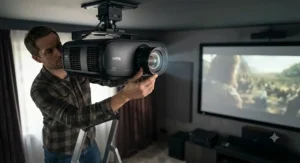
DLP Home Cinema Projector vs Living Room Projector
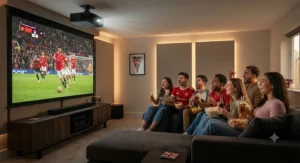
The distinction between a dedicated DLP home cinema projector and a general living-room model isn’t always obvious from spec sheets alone, but it shapes almost every buying decision on this list. Home cinema projectors, epitomised here by the BenQ W2720i, are engineered and calibrated on the assumption of a fully darkened, purpose-built room, prioritising colour accuracy, contrast and black-level performance over raw brightness. Living-room and lifestyle projectors, like the XGIMI Horizon 20 Max and XGIMI Horizon 20 Pro, flip that priority, chasing maximum lumens and daytime usability because they’re designed to double as a TV replacement in a space nobody is willing to blackout completely. Neither category is objectively “better” — it’s entirely about how your room actually behaves; a dedicated cinema unit dropped into a bright, uncurtained lounge will disappoint regardless of its reviews, while a bright lifestyle projector in a genuinely dark room can look slightly less nuanced in shadow detail than a purpose-built cinema unit at the same price. Reviewers consistently frame this as the single most common buying mistake: people choose based on brand reputation or headline lumens figures rather than being honest about how dark their room actually gets.
Practical Usage Guide: Setup, Focus and the First 30 Days
Getting a new DLP projector right in its first month matters more than most buyers expect, and a handful of simple habits prevent the majority of common complaints. On day one, resist the urge to judge picture quality before you’ve properly dialled in focus and keystone correction; auto-alignment features on units like the Anker Nebula Capsule 3 and Hisense PX3-Pro get you close, but a five-minute manual fine-tune using a still test pattern noticeably sharpens the final image. Next, disable “Vivid” or “Dynamic” picture presets immediately — nearly every projector ships with an oversaturated, blue-heavy default mode intended to impress in a bright showroom, and switching to a Cinema or Filmmaker mode, as available on the BenQ W2720i and Valerion StreamMaster Plus 2, gets you dramatically closer to accurate colour with zero cost. During the first fortnight, run the projector through a genuine mix of content — dark cinematic footage, bright sports, and fast-motion gaming if relevant — rather than only testing with demo reels, since real usage reveals fan noise levels and heat build-up that showroom conditions mask. Worth noting for UK households casting or streaming catch-up TV through a Google TV or Android TV projector: watching BBC iPlayer still requires a valid TV Licence regardless of which device or screen you use, so don’t assume a projector setup is exempt. By week three, revisit lens or keystone settings once more; thermal expansion in a new unit can cause a very slight focus drift as components settle in. Finally, register your warranty immediately and note your specific model’s lamp, LED or laser life rating so you can budget realistically for eventual replacement or recalibration rather than being caught out years down the line.
Real-World Buyer Scenarios
Matching a projector to your actual life, rather than to a spec sheet in isolation, avoids most buyer’s remorse. Consider a university student commuting between a shared house and family home each term: portability and battery life outweigh everything else, making the Anker Nebula Capsule 3 the sensible pick despite its modest brightness, since it survives a rucksack and a garden film night equally well. Contrast that with a couple converting a spare box room into a proper home cinema, with total control over blackout curtains and no ambient light to fight: here the BenQ W2720i‘s calibrated colour accuracy and deep contrast justify the higher spend, because the room itself is doing half the work of the picture quality. Finally, picture a family wanting to retire their ageing 55-inch TV entirely in favour of a genuinely cinematic 120-inch experience in a normal, lived-in lounge that still gets daylight through the windows — the Hisense PX3-Pro‘s ultra-short throw and daytime-friendly brightness solve both the placement problem and the lighting problem simultaneously, at a price that, while substantial, still undercuts an equivalent premium OLED TV of that screen size.
Common Mistakes When Buying a DLP Projector
The single most frequent error, based on aggregated reviewer commentary across this entire category, is buying on lumens alone without checking contrast ratio or native black-level performance, which leaves buyers with a bright but flat-looking picture in dark scenes. A close second is ignoring throw distance requirements entirely; buyers repeatedly discover after delivery that a long-throw unit like the Optoma UHD38x simply cannot fill their intended screen size in a smaller room, a problem an ultra-short-throw model would have avoided from the outset. Third, many first-time buyers skip budgeting for a screen altogether, projecting straight onto a painted wall and then blaming the projector for a soft, low-contrast image that a proper ambient-light-rejecting screen would have fixed. Fourth, overlooking smart platform limitations catches people out too — Google TV and Android TV projectors frequently lack native BBC iPlayer, ITVX or All4 apps, as is the case with several models here, so UK buyers relying on catch-up TV should factor in a streaming stick from day one. Finally, underestimating fan noise is a recurring theme in review comments; brighter laser and lamp-based units inevitably run warmer and louder than modest LED models, which matters enormously if your seating is close to the projector itself.
Long-Term Cost & Maintenance
Total cost of ownership varies dramatically across light-source technology, and it’s an area Amazon listings rarely explain clearly. Lamp-based projectors, now a shrinking minority of the market, typically need bulb replacements every 3,000-5,000 hours at a real cost of £100-£200 per lamp, whereas the LED and laser-lit models dominating this list — including the BenQ W2720i‘s LED engine and the Hisense PX3-Pro‘s laser source — are rated for 20,000-25,000+ hours, which at typical usage of a couple of hours a day translates to well over a decade of use before any light-source concern arises. Screens, where needed, represent a genuine hidden cost: a quality ambient-light-rejecting screen for a UST setup like the PX3-Pro can add several hundred pounds to the real total spend, a figure that rarely appears in headline pricing. Electricity costs are comparatively modest — even the brightest laser units here draw roughly 250-350 watts in use, translating to a few pence per hour of viewing at typical UK electricity tariffs, considerably less than most people assume. Cost-per-use, spread across a multi-year lifespan and reasonable weekly viewing, works out favourably against an equivalent-sized flat-panel TV in almost every case here, particularly once you factor in that a 100-inch-plus OLED remains vastly more expensive than any projector on this list. When a unit eventually reaches end of life, remember it falls under the UK’s WEEE electrical recycling regulations rather than general household waste, so use a proper electricals recycling point instead of the bin.
Buyer’s Decision Framework
Use this simple framework to shortcut the decision if you’re still torn between models.
- If your room stays genuinely dark and film quality is everything, choose a dedicated home cinema DLP like the BenQ W2720i, because contrast and colour accuracy outweigh raw brightness in that environment.
- If you need to carry your projector between locations, choose an ultra-portable DLP like the Anker Nebula Capsule 3, because battery life and size matter more than peak lumens for that use case.
- If your lounge gets daylight and can’t be fully blacked out, choose a high-lumen lifestyle DLP like the XGIMI Horizon 20 Max or XGIMI Horizon 20 Pro, because ambient-light performance is the deciding factor there.
- If you want to eliminate your TV entirely without a ceiling installation, choose an ultra-short-throw DLP like the Hisense PX3-Pro, because placement flexibility solves the practical objection that stops most people buying a projector at all.
- If your budget sits in the middle and you want the newest light-source tech, choose a triple-laser value pick like the Valerion StreamMaster Plus 2, because it delivers premium-tier brightness and format support without the premium-tier price tag.
DLP Projector Reviews: What Reviewers Actually Agree On
Pulling together aggregated sentiment across the professional reviews cited throughout this guide, a handful of consistent themes emerge regardless of brand or price point. Nearly every DLP projector reviewer agrees that modern XPR pixel-shifting genuinely delivers a 4K-equivalent viewing experience at typical seating distances, even though purists correctly point out it isn’t a native 4K panel in the strictest technical sense. There’s also broad consensus that laser and LED light sources have made lamp-based DLP largely obsolete for home use, given the dramatic gap in maintenance-free lifespan and the improved colour consistency laser sources deliver over their operating life. Where reviews diverge more is on value for money at the very top of the market — some testers feel the jump in price from mid-range units like the Valerion StreamMaster Plus 2 to flagship models like the XGIMI Horizon 20 Max is justified purely by brightness and processing improvements, while others argue the law of diminishing returns kicks in hard past the £2,000 mark for most typical living rooms. What’s genuinely useful about reading multiple reviews side by side, rather than trusting a single source, is spotting where independent testers’ measured brightness or contrast figures diverge from manufacturer claims — a pattern that shows up repeatedly across this entire category and is worth checking before you commit to any single model.
✨ Ready to compare current listings? Take a closer look at today’s prices below.
✨ Don’t Miss These Exclusive Deals!
🔍 Take your home cinema setup to the next level with these carefully researched DLP projectors. Click through to check current pricing and availability on each model. These picks will help you build a genuinely cinematic movie night your whole family will love! 🍿🎬
FAQ
❓ What's the difference between a DLP projector and an LCD projector?
❓ Is a DLP projector good for a bright living room?
❓ Do DLP projectors suffer from screen burn-in?
❓ How long do DLP projector lamps or lasers actually last?
❓ Can I use a DLP projector for gaming without noticeable lag?
Recommended for You
- Laser Projector Under £1000: 7 Brilliant Picks for 2026
- Laser Projector Vs Lamp Projector: 7 Top Picks Ranked For 2026
- Best Laser Projector 2026: 7 Top Picks Tested & Rated
Disclaimer: This article contains affiliate links. As an Amazon Associate, I earn from qualifying purchases. If you purchase products through these links, we may earn a small commission at no additional cost to you.
✨ Found this helpful? Share it with your friends! 💬🤗
